Core Keywords: 3-axis CNC drilling and milling machine for aluminum profiles, aluminum profile CNC machining, door and window aluminum processing machine, high precision aluminum milling machine
For aluminum fabrication workshops focusing on doors, windows, curtain walls, and industrial aluminum extrusions, machining accuracy and consistency define product quality. Manual routing and traditional single-function drilling equipment can no longer meet modern production demands.
This is where a 3-axis CNC drilling and milling machine for aluminum profiles becomes a core asset on your production line. It streamlines multiple complex processes into one automated workflow, helping manufacturers cut labor costs, eliminate repeated positioning errors, and deliver uniform finished parts at scale.
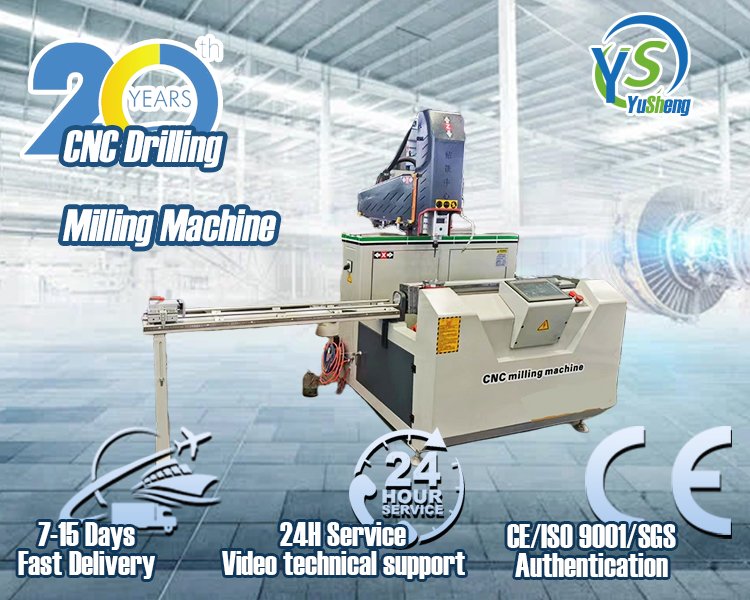
What Is a 3-Axis CNC Drilling & Milling Machine for Aluminum Profiles?
A 3-axis aluminum profile CNC machining center is a dedicated automated device designed exclusively for aluminum extrusion processing. Unlike universal CNC machines optimized for steel or heavy metal cutting, this equipment is tailored for the lightweight, low-hardness characteristics of aluminum alloy profiles.
It adopts full servo-controlled X, Y, Z three-axis linkage motion. The X-axis handles long-stroke horizontal movement for full-length profile processing, while the Y and Z axes control precise transverse and vertical cutting positioning. All movements are governed by professional CNC programming, enabling fully automated drilling, slot milling, chamfering, and light tapping.
Equipped with a rotatable worktable adjustable at -90°, 0°, and +90°, the machine supports three-sided profile machining in a single clamping setup. This eliminates repeated disassembly and positioning, a key advantage for high-volume aluminum profile production.
Key Benefits of 3-Axis CNC Aluminum Profile Machining Equipment
Most aluminum fabrication owners choose this machine for three practical, profit-driven advantages that solve common production pain points.
1. Higher Precision, Zero Defective Hardware Fitting
Aluminum door and window failure most often stems from inaccurate lock holes, uneven milling grooves, or mismatched mounting holes. Such flaws lead to loose hardware installation and poor product tightness.
This 3-axis CNC drilling and milling machine for aluminum profiles delivers a positioning accuracy of ±0.01mm and repeated positioning accuracy of ±0.005mm. Every hole and groove follows programmed digital parameters strictly, ensuring consistent dimensions across all finished profiles. It fully meets the high-precision assembly standards of architectural aluminum and curtain wall projects.
2. One-Clamping Multi-Process Processing Saves Time
Traditional production requires separate machines for drilling, milling, and chamfering, with frequent workpiece repositioning. This process is time-consuming and introduces cumulative errors.
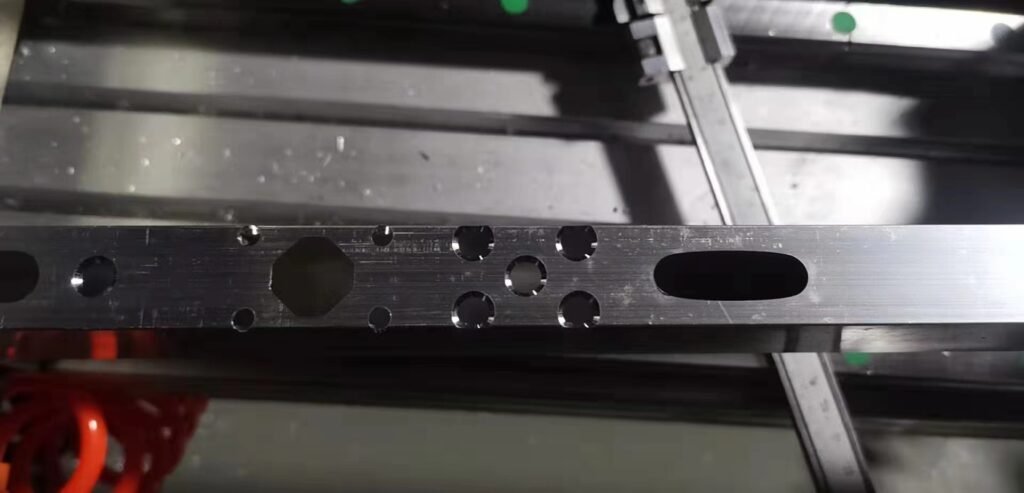
This integrated CNC machine completes all core processes in one clamping: round hole drilling, countersinking, lock slot milling, special-shaped groove cutting, end face trimming, and edge chamfering. It greatly shortens production cycles and improves overall workshop efficiency.
3. Low Operation Threshold, Reduced Labor Reliance
Many small and medium aluminum factories struggle with the shortage of skilled senior operators. Complex traditional CNC equipment requires professional programming skills and long-term training.
This aluminum profile CNC machine is equipped with a user-friendly industrial control system. It supports one-click CAD-to-G-code conversion, requiring no complex manual programming. New operators can master basic production operations in half a day, effectively reducing dependence on skilled workers.
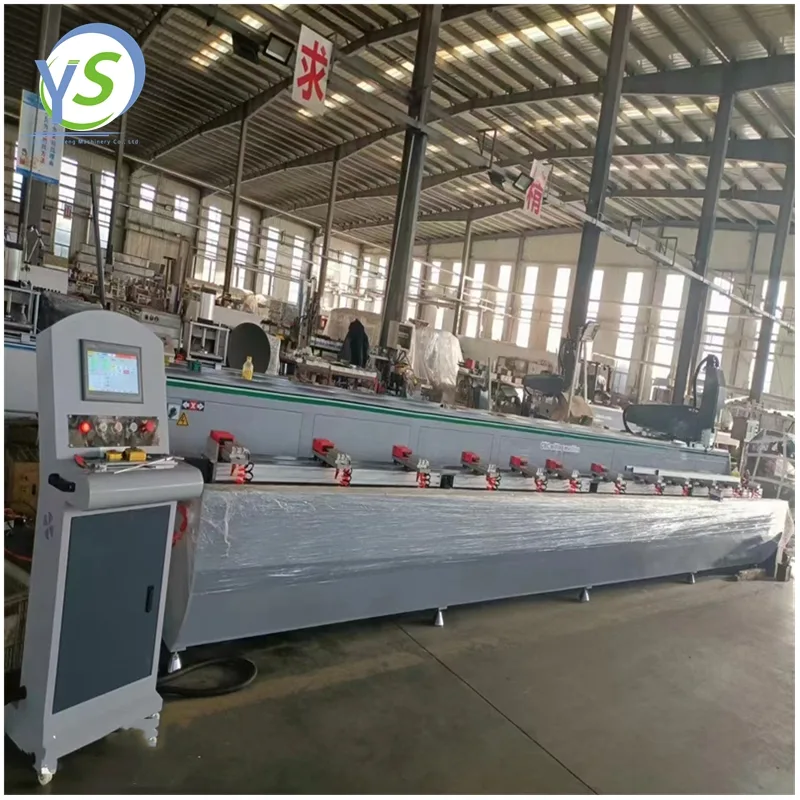
Core Structural Features That Ensure Stable Performance
The stable long-term operation of CNC equipment relies on solid structural design, not just parameter labels. Here are the core configurations that distinguish high-quality aluminum processing machines.
Rigid Welded Bed for Long-Term Stability
The machine bed adopts thick steel plate integral welding and undergoes strict thermal aging stress relief treatment. This eliminates internal structural stress generated during production, effectively avoiding machine deformation after long hours of high-speed operation. It maintains stable machining accuracy for years, suitable for continuous industrial production.
High-Precision Transmission System
It adopts a differentiated transmission design for different axes: the X-axis uses high-precision helical gear and rack transmission to support fast, stable long-stroke movement. The Y and Z axes are equipped with imported ball screw pairs and linear guide rails, ensuring smooth operation, zero backlash, and ultra-fine positioning.
High-Speed Air-Cooled Spindle for Aluminum Fine Machining
Matched with a 3.5–4.5kW high-speed air-cooled spindle, the machine supports stepless speed regulation from 0 to 18,000rpm. Low vibration and low noise characteristics adapt perfectly to high-speed fine cutting of soft aluminum materials. It avoids workpiece surface burning and tool burrs, greatly improving the surface finish of finished profiles.
Intelligent Control & Protective System
The professional dedicated CNC controller features real-time fault self-diagnosis and processing status display. The adjustable pneumatic fixture firmly fixes profiles of different cross-sections to prevent cutting vibration and deformation. The automatic spray cooling system reduces tool thermal wear and extends cutter service life.
Main Applications of the 3-Axis CNC Drilling & Milling Machine
Versatile and practical, this equipment covers most mainstream aluminum profile processing scenarios, making it a universal choice for aluminum fabrication workshops.
- Architectural Aluminum Profiles: Processing lock holes, hardware mounting grooves, and connecting holes for aluminum doors, windows, and curtain wall keels
- Industrial Aluminum Extrusions: Machining assembly line frames, photovoltaic support profiles, and equipment cabinet aluminum beams
- Light Alloy Processing: Fine drilling and milling for copper profiles and UPVC plastic profiles, with strong multi-material compatibility
3-Axis vs 4-Axis CNC Machines: Which Is Better for You?
Many factory owners hesitate between 3-axis and 4-axis aluminum CNC machines. In fact, the 3-axis model is the most cost-effective choice for 90% of standard aluminum processing scenarios.
For conventional door, window, and curtain wall profiles with regular holes and grooves, a 3-axis CNC drilling and milling machine for aluminum profiles fully meets production needs. It features lower equipment investment, simpler maintenance, and higher processing efficiency for standard workpieces.
4-axis or 5-axis equipment is only necessary for ultra-complex special-shaped profiles with multi-angle three-dimensional processing requirements. For most mass production workshops, the 3-axis model delivers the best return on investment.
Final Thoughts
In the increasingly competitive aluminum fabrication industry, standardized precision and automated efficiency are the core of winning market orders. Replacing traditional manual equipment with a professional 3-axis CNC drilling and milling machine for aluminum profiles is no longer a premium upgrade, but a necessary step for factory standardized production.
It solves the pain points of low efficiency, unstable precision, and high labor costs, helping aluminum processing enterprises stabilize product quality, expand production capacity, and gain stronger market competitiveness.
FAQ
Q1: What materials can a 3-axis CNC aluminum drilling and milling machine process?
A1: It is mainly designed for aluminum alloy profiles, and also compatible with copper profiles, UPVC, and other light materials, covering most architectural and industrial profile processing needs.
Q2: What is the maximum drilling diameter of this machine?
A2: The standard model supports a maximum drilling diameter of 20mm, meeting the processing requirements of most profile mounting holes and hardware fixing holes.
Q3: Is professional programming experience required for operation?
A3: No. The machine supports automatic CAD drawing conversion. Ordinary workers can operate it after simple training, with no need for professional CNC programming skills.