
When shopping for metal bending equipment for sign‑making, architectural metalwork or aluminium profile processing, buyers often get confused between a CNC letter bending machine and a CNC 3‑axis profile bending machine. On the surface, both machines perform automated bending on metal strips and profiles. Yet they are built for different end products, material handling and production workflows. Choosing the wrong unit leads to low efficiency, wasted budget and unsatisfactory finished parts.
This practical guide breaks down their core differences, main applications, key mechanical features and ideal use cases, to help you pick the right bending solution for your workshop.
Core Design Purpose
CNC Letter Bending Machine
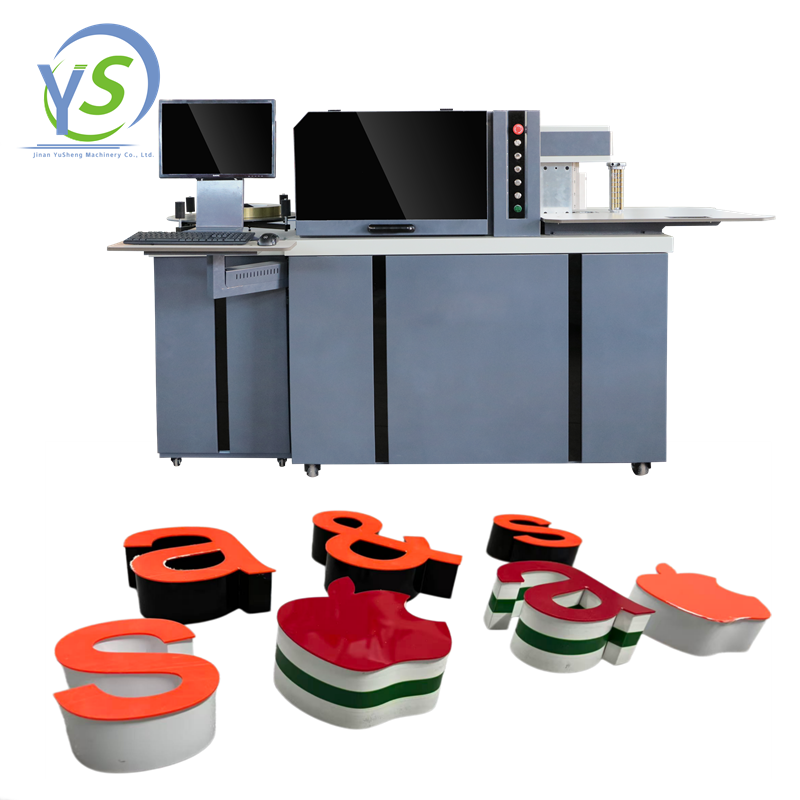
A CNC letter bending machine, also known as a channel letter bender, is purpose‑engineered for advertising sign production. Its primary mission is to bend thin metal strips into precise 2D letter outlines for illuminated channel letters, logos and signage characters.
It works with flat, narrow metal strips: aluminium coils, stainless steel strips and galvanized steel strips are its most common raw materials. The machine completes feeding, notching, bending and cutting in one continuous cycle, focusing on fast, closed‑shape letter contours.
CNC 3‑Axis Profile Bending Machine
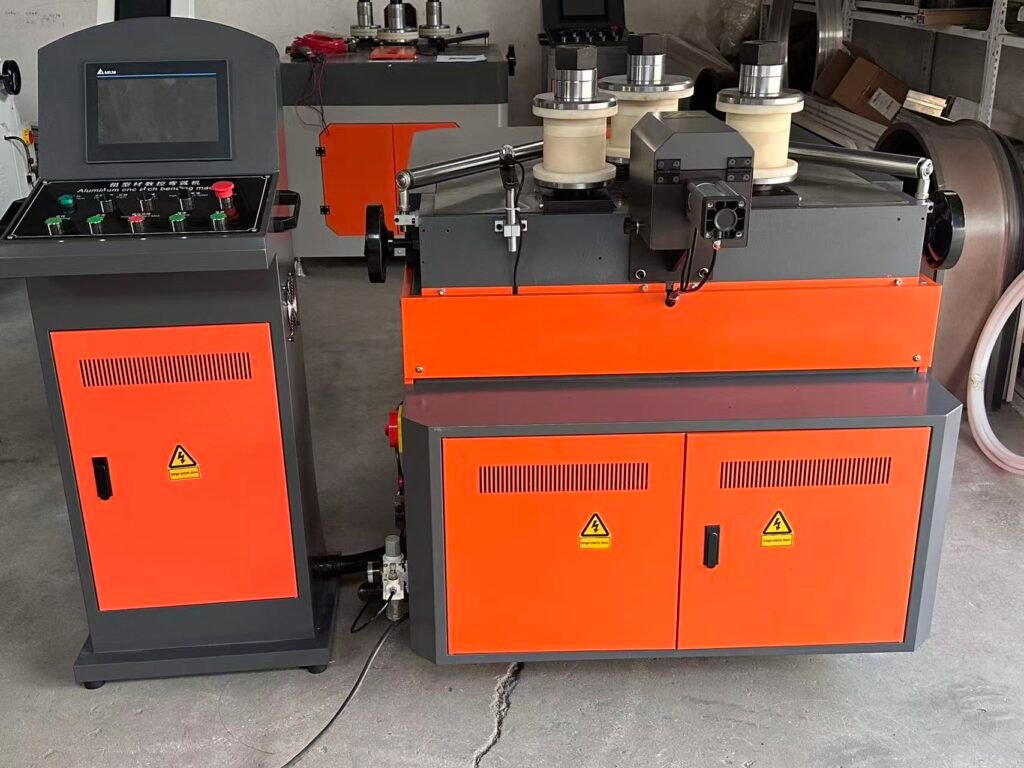
The CNC 3‑axis profile bending machine targets architectural and industrial profile forming. It handles solid or hollow extruded profiles, aluminium extrusions, rectangular tubes and special‑section bars.
Its three‑axis control delivers multi‑directional bending. It can produce complex curved shapes, helical arcs, 3D spatial bends and large‑radius architectural frames. It is built for heavy‑duty profile deformation instead of thin sign strips.
Key Functional Differences
1. Processed Materials
- CNC letter bending machine: Thin‑gauge strip material. Typical thickness ranges from 0.6 mm to 1.5 mm. Material comes in coil form for continuous automatic feeding. Profiles with large cross‑sections cannot be processed.
- CNC 3‑axis profile bending machine: Solid or hollow extruded profiles, tubes and bars. It supports thicker wall thickness and bigger cross‑section sizes. Coil strip feeding is not its strength.
2. Bending Output
- CNC letter bending machine: Mainly 2‑dimensional planar shapes. Channel letters, digits, brand logos, simple sign frames. Most outputs stay on one flat plane. Sharp angular bends are its advantage.
- CNC 3‑axis profile bending machine: Both 2D arcs and true 3‑space bending. Curved architectural facades, handrail frames, window arch profiles, spiral decorative parts. Smooth large‑radius curve forming is its highlight.
3. Working Workflow
For the CNC letter bender: import DXF letter files → auto‑unfold drawing → automatic notch cutting → sequence bending → auto cutting to finish one letter loop. Operators can mass‑produce batches of sign letters with minimal manual intervention.
For the CNC 3‑axis profile bending machine: load single profile bar onto fixture → set bending sequence via CNC program → perform multi‑angle and multi‑direction bending. Each workpiece is loaded individually, not continuous coil feeding.
Typical Industry Applications
Where to use a CNC letter bending machine
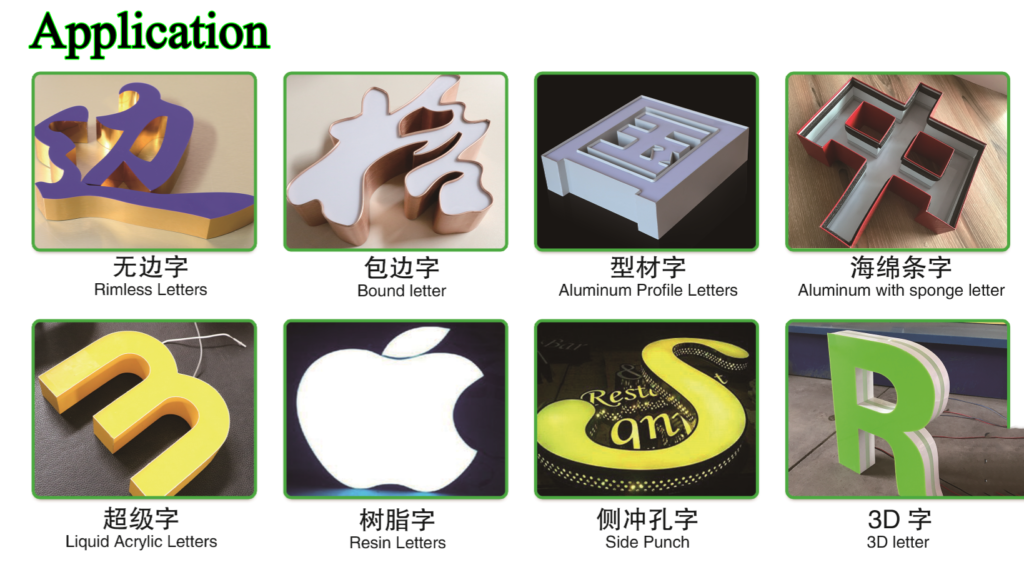
- Illuminated channel letter fabrication shops
- Advertising sign and logo manufacturing
- Small‑size decorative metal character production
- High‑volume sign‑letter batch production
If your core business is making advertising signs, this machine will give you much faster cycle time and higher yield than a general‑purpose profile bender.
Where to use a CNC 3‑axis profile bending machine
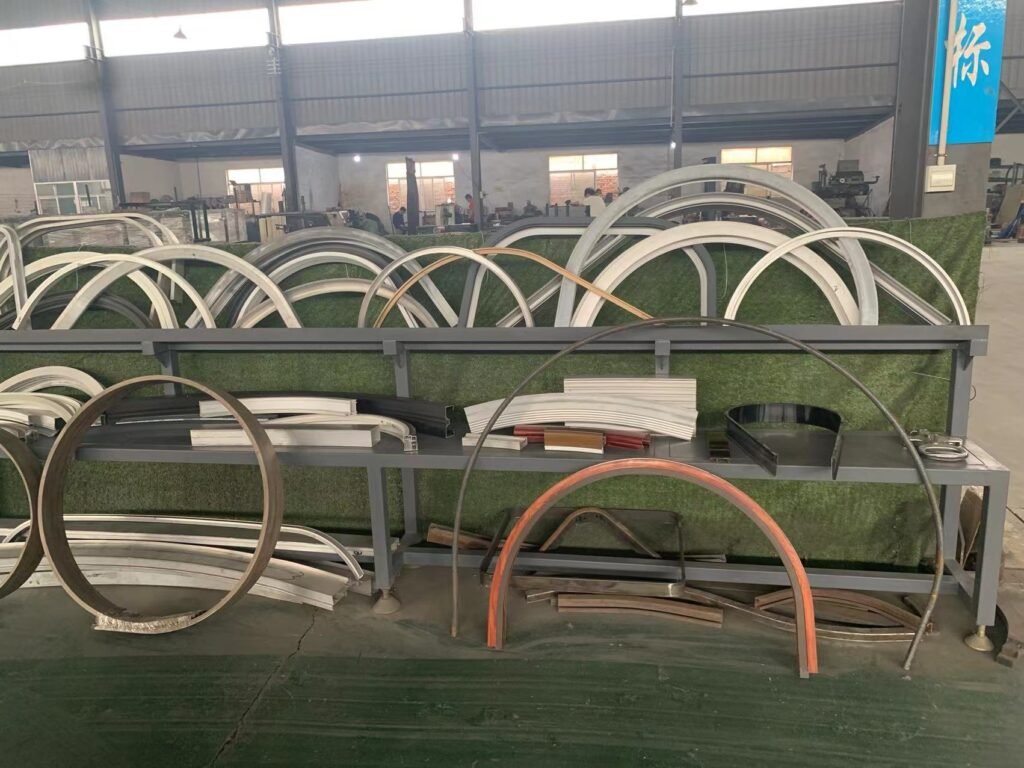
- Architectural metal‑fabrication workshops
- Aluminium facade and curtain wall processing
- Handrail, balustrade and arched window profile production
- Industrial custom‑shaped profile component manufacturing
When your projects require complex curved or three‑dimensional profile frames, the 3‑axis profile bending machine delivers results that a letter bender cannot achieve.
How to Make Your Final Choice
Ask yourself three simple questions before placing an order.
First: What are your most frequent finished products?
If most jobs are channel letters and advertising logos, go for the CNC letter bending machine. If you mainly process architectural extrusions and curved profile frames, select the CNC 3‑axis profile bending machine.
Second: What material form do you process most of the time?
Coil strips point toward a letter bender; solid/hollow extruded profiles point toward the 3‑axis profile bending machine.
Third: Do you need 3‑dimensional curved parts?
Simple flat letter contours do not require 3‑axis control. Complex spatial bends demand the 3‑axis profile bending solution.
Many medium‑size workshops purchase both machines to cover sign‑making and architectural metal‑bending businesses. But for small‑scale factories, match the equipment to your main order stream to avoid over‑investment.
Final Thoughts
CNC letter bending machine and CNC 3‑axis profile bending machine both belong to the CNC metal‑bending family, yet they serve totally different market segments. The letter bender optimizes speed and automation for advertising sign letters. The 3‑axis profile bending machine focuses on powerful multi‑direction deformation for architectural and industrial profiles.
Understanding these distinctions helps machinery buyers avoid costly mis‑purchase and maximise workshop productivity. If you are evaluating new bending equipment, always confirm sample processing with your supplier according to your real‑world workpiece samples.

