
For frame manufacturing workshops, custom irregular decorative frames are among the most profitable yet technically‑challenging product lines. Modern interior decoration, facade cladding, lighting frames, art installation borders and retail display structures keep pushing demand for curved, arched and non‑standard aluminium profiles. Many factory owners face a common puzzle: what kind of bending equipment delivers stable output for complex custom frames without sacrificing efficiency or wasting expensive profile stock.
While single‑direction bending devices work fine for simple circular arcs, they hit clear limits when handling multi‑radius, S‑shaped or compound curved decorative frames. Multiple re‑clamping steps are required, which introduces positioning errors, visible joint lines and high scrap rates. For small‑batch custom orders frequent in frame factories, repeated manual adjustment also drags down overall throughput. This is exactly where the CNC Bidirectional Aluminum Steel Profile Bending Machine stands out as a practical solution dedicated to custom decorative frame production.
Why bidirectional bending matters for decorative frame production
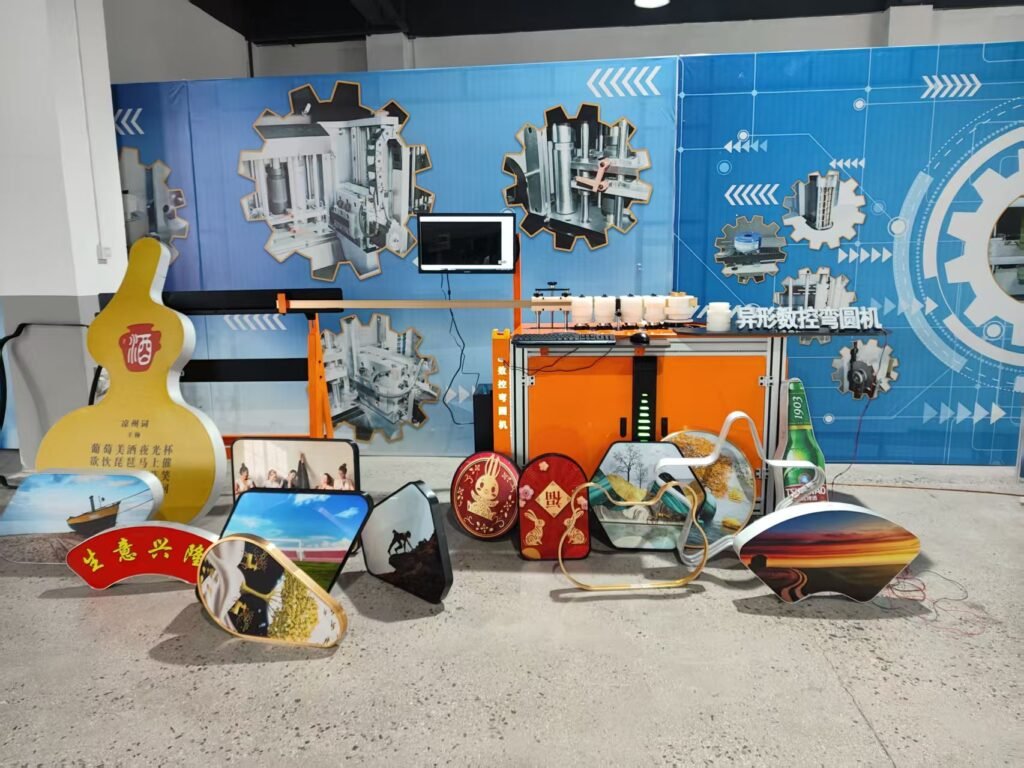
Decorative frames rarely follow one‑way single‑arc designs. A single finished frame piece may contain outward and inward bends, variable radii and transitional curve segments. Traditional one‑way benders need operators to flip profiles halfway through processing. Each flip brings alignment deviation, and thin‑wall aluminium profiles are easy to scratch or deform during re‑positioning.
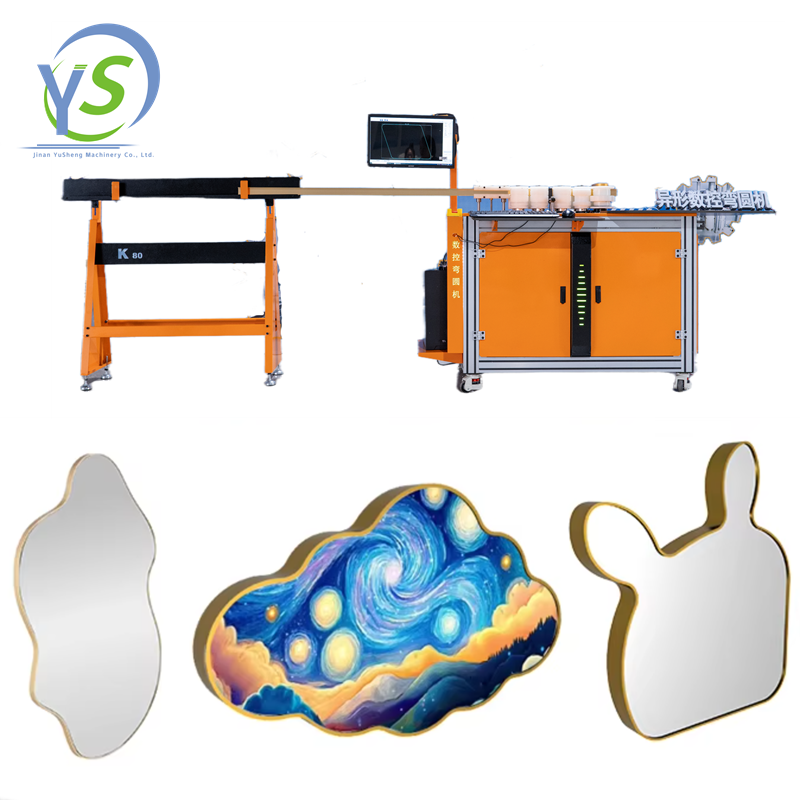
The CNC bidirectional aluminum steel profile bending machine completes both positive and reverse bending in one single clamping setup. Profiles stay fixed once loaded. The CNC controller calculates each bending point, arc transition and radius value according to imported CAD data. Operators avoid repeated manual flipping and re‑alignment. For irregular artistic frames, arched window trims, curved ceiling borders and special‑shape lighting housings, this capability directly lowers surface defects and improves frame consistency across batches.
Most decorative frames use thin‑wall aluminium alloy, while some projects call for stainless steel or mixed material profiles. Bidirectional CNC benders support both aluminium and steel profiles, giving frame factories greater flexibility to take mixed‑material custom orders without investing in two separate bending units.
Core practical features frame factories care about
Real‑world frame workshop conditions demand more than just bidirectional movement. Several functional points directly affect daily production profitability:
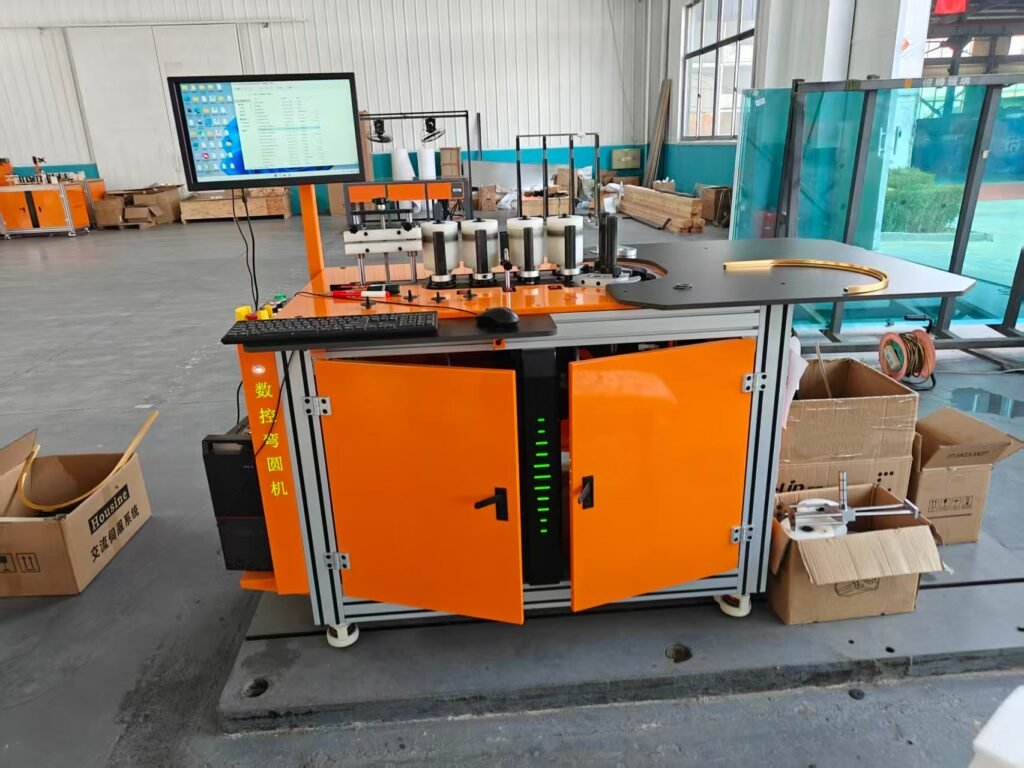
- High‑precision CNC control for custom geometries Operators can import DXF files or input radius and length parameters manually. The system automatically generates bending paths for irregular multi‑curve frames. Tolerance stays tight, so bent segments fit together smoothly during subsequent welding and assembly. This greatly reduces fitting‑and‑trimming work on finished frames.
- Profile surface protection design Decorative frames go straight to visible finished surfaces. Scratches, dents and indentations mean rejected parts. This machine uses wear‑resistant non‑marking rolling moulds to protect anodized, powder‑coated and painted aluminium surfaces, keeping frame appearances intact after bending.
- Adaptability to varied profile cross‑sections Decorative frames come in countless cross‑section shapes: hollow aluminium sections, narrow flat strips, special‑shape decorative extrusions. Quick‑change mould sets allow factories to switch between different frame profiles rapidly, well‑suited for frequent small‑batch custom orders instead of only mass‑run standard parts.
- Stable performance for long‑run workshop use Robust mechanical frame structure cuts down vibration during continuous bending. For frame shops running day‑to‑day custom orders, less downtime and fewer mechanical failures equal steady order delivery and better customer reputation.
When should frame factories pick this bidirectional CNC bending solution?
This machine is not for every workshop. It brings maximum value under these scenarios:
- You regularly produce custom irregular decorative frames, arched borders, S‑curve and multi‑radius frame components
- You process both aluminium and steel profiles for decoration, construction or display projects
- You receive many small‑batch, high‑mix custom orders and want to cut scrap caused by repeated re‑clamping
- Your customers require high‑quality surface finishes and precise joint matching for visible decorative frames
If your work mainly focuses on simple single‑arc circular frames, basic single‑direction benders may meet your needs. But as custom irregular frame orders grow, the limitations of older equipment become a bottleneck for business expansion. Many frame manufacturers upgrade to bidirectional CNC bending machines precisely to take on higher‑margin custom decoration projects.
Final thoughts
Competition in decorative frame manufacturing keeps intensifying. Winning custom project orders depends not only on design capability, but also on equipment that turns complex drawings into qualified physical frames efficiently.
For frame factories hunting reliable equipment for irregular custom decorative frames, the CNC Bidirectional Aluminum Steel Profile Bending Machine solves real pain points: bidirectional forming in one clamping, compatibility with aluminium and steel, good surface protection and CNC‑driven precision. It helps workshops lower scrap rates, shorten lead times and take on more high‑value custom decorative frame jobs.
If you are upgrading your profile bending capacity for decorative frame production, evaluate your typical curve complexity, material range and batch characteristics. A suitable bidirectional CNC bending unit can become a core asset for your custom frame business.

