
If you run a window, door or curtain wall fabrication shop working with PVC and aluminium profiles, you know cutting errors snowball fast. A slightly off 45° mitre, ragged edges, melted PVC surfaces or chatter marks do not just look bad — they create gaps at corners, leaky finished frames, hours of rework and piles of expensive profile scrap. Many fabricators start with single-head saws or older manual mitre equipment and fight these defects daily. The good news: most of these recurring cutting problems can be eliminated by upgrading to a properly tuned high-precision double mitre saw machine built for both PVC and aluminium extrusion profiles.

The Most Common Cutting Defects in PVC and Aluminium Profile Fabrication
Profile cutting behaves very differently for these two materials. Aluminium is ductile and prone to burrs and chatter; PVC softens easily under heat and can melt or splinter if cutting speed and feed are not controlled. Below are the issues fabricators deal with most often.
Angle Inaccuracy and Mismatched Corner Joints
This is the number-one headache for frame makers. When two 45° cuts are not perfectly matched, corners leave visible gaps. Even an error of 0.2° adds up across every frame you assemble. Manual saws rely on repeated manual adjustment, and head drift creeps in after long production runs. What was acceptable for small batches becomes unreliable for consistent mass production.
H3: Burrs, Chatter Marks and Rough Cut Surfaces (Aluminium)
Aluminium extrusions tend to form sharp burrs on the exit side of the cut. Vibration from weak clamping, unstable saw travel or worn blades leaves chatter lines across the cutting face. Those burrs need extra deburring labour, scratch powder-coated surfaces and make assembly tight and frustrating.
H3: Melting, Splintering and White Stress Marks (PVC / UPVC)
PVC cannot tolerate excessive cutting heat. If blade speed is too high or feed is too slow, the profile edge melts, then re-hardens into a sticky, uneven bead. Brittle outer layers also splinter, leaving fuzzy white edges that cannot be hidden after welding. This defect is especially annoying because once melted, the cut piece is usually scrap.
Length Variation and Poor Repeatability
When you cut both ends of a long profile one at a time on a single-head saw, every manual repositioning introduces new tolerance drift. Batch after batch, finished profiles come out slightly different lengths. Assembly teams waste time sorting parts, and production scheduling becomes unpredictable.
H3: Profile Scratches and Deformation
Thin-walled PVC and lightweight aluminium profiles bend easily under uneven clamping pressure. Cheap saw fixtures can crush hollow chambers or scratch finished surfaces, ruining pre-coated profiles before they even reach assembly.
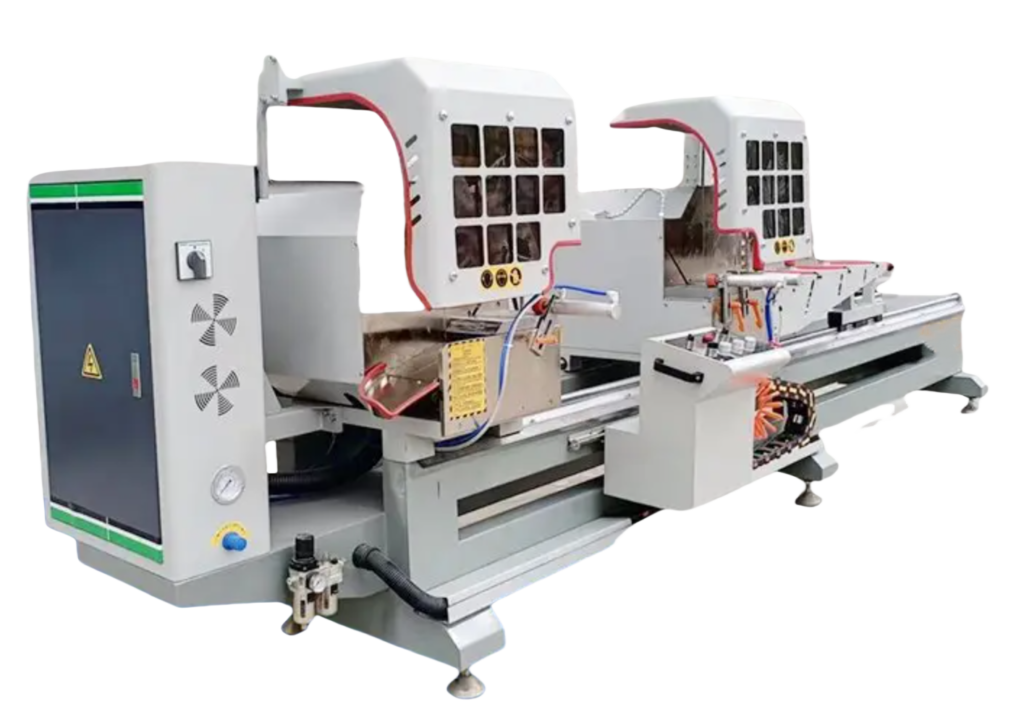
How a High-precision Double Mitre Saw Eliminates These Profile Cutting Problems
A quality double mitre saw uses two synchronised cutting heads, one fixed and one movable, to cut both ends of a profile in one single operation. That core design removes most human-introduced error, while modern upgrades address the unique behaviours of aluminium and PVC separately.
First, rigid machine frames, linear guide systems and servo positioning lock in stable length and angle settings. Top models hold length tolerance around ±0.1 mm and angular accuracy within ±0.1°, so every 45° mitre matches reliably, batch after batch. No more guessing and re-calibrating between profiles.
Controlled, smooth hydro-pneumatic or servo feed solves the heat and vibration issue. Operators can set independent cutting parameters: higher RPM and suitable triple-chip blades for aluminium with optional mist lubrication; lower, cooler cutting speed for PVC to avoid melting and splintering. Integrated dust extraction pulls away fine PVC chips and aluminium swarf immediately, reducing heat build-up and keeping the cutting zone clean.
Custom profile support blocks and soft, adjustable clamping hold hollow sections firmly without squeezing or scratching. The profile stays stable during the full cut stroke, so chatter drops sharply and burr formation is minimised. For coated and foiled PVC profiles, this gentle clamping is a huge upgrade over generic vice arrangements.
Another practical gain: throughput. Cutting both ends at once cuts cycle time significantly. You do not need to flip, re-measure and re-clamp every bar. Shops running steady window and door orders usually see faster output while keeping quality consistent, rather than trading speed for accuracy.
Is a Double Mitre Saw Right for Your Workshop?
This machine is the best fit if your core work is UPVC windows, aluminium doors, curtain wall profiles, and you regularly cut 45° mitre joints. It works well for small custom fabricators and larger production lines alike.
That said, it is not a magic fix on its own. You still need to select the correct carbide blade for your material, follow scheduled lubrication and calibration routines, and keep clamping supports matched to your profile shape. Many shops buy the machine but run the wrong blade for PVC and still end up with melted edges.
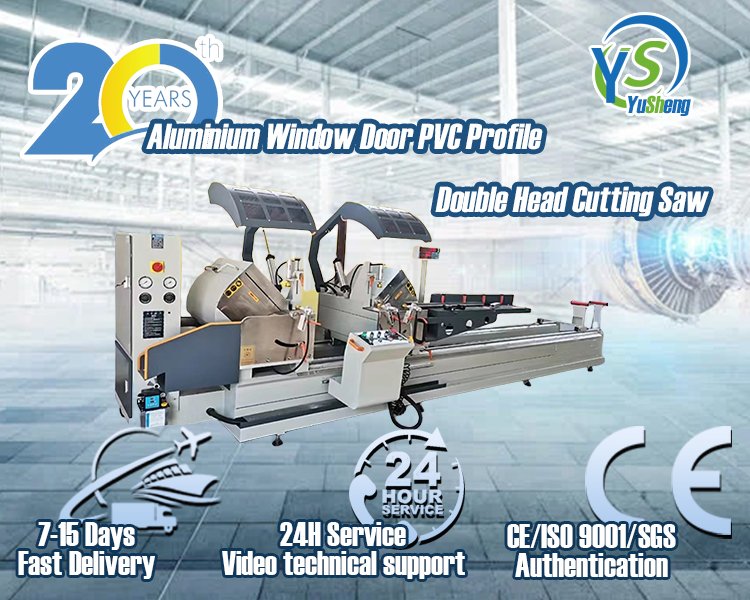
Final Thoughts
Cutting defects are rarely just “operator mistakes”. A lot of the time, they are the natural limit of older, less stable cutting equipment. When gaps, burrs, melted PVC and high scrap rates keep eating your margin, switching to a high-precision double mitre saw directly targets those root causes: inconsistent angle, vibration, heat build-up and repeated manual handling.
Clean, repeatable mitre cuts make the rest of your workflow smoother. Welding, crimping and sealing all work as designed, finished frames seal properly, and you spend far less time fixing cutting defects.
FAQ
Q: Can one double mitre saw cut both PVC and aluminium profiles?
A: Yes, but you need to swap blades and adjust cutting speed, feed rate and lubrication settings between materials. Aluminium needs different tooth geometry and often mist lubrication, while PVC runs cooler without lubricant to avoid melting.
Q: What accuracy should I expect from a high precision double mitre saw?
A: Reliable industrial models deliver length tolerance ±0.1 mm and angle tolerance ±0.1°, suitable for high-grade window and curtain wall production.
Q: Does a double mitre saw only cut 45 degrees?
A: Most industrial versions can adjust between -45° and +45°, supporting 90° straight cuts and many custom bevel cuts for special profile designs.

