
In modern metal fabrication, sign making, and architectural aluminum processing, precision and efficiency dictate profit margins. Standard profile bending machines often fall short when handling intricate designs, forced bends, or dual-direction curves—requiring operators to manually flip materials or run multiple passes.
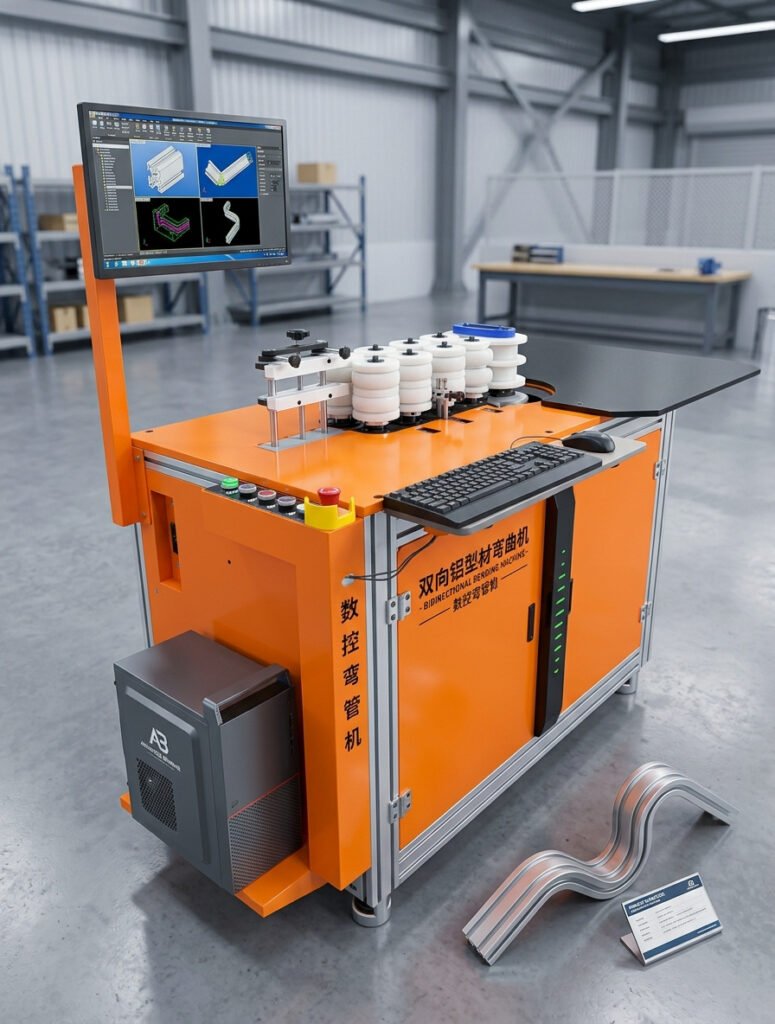
Enter the Bidirectional Aluminum Profile Bending Machine—a CNC-powered machine built to automate dual-direction bending with extreme accuracy.
What Is a Bidirectional Aluminum Profile Bending Machine?
Unlike traditional single-direction benders that roll or push material in one orientation, a bidirectional profile bender features multi-axis CNC controls capable of shaping aluminum profiles both left and right (clockwise and counter-clockwise) within a single continuous program sequence.
Equipped with a specialized roller array and computer numerical control (CNC) software, this equipment handles intricate curves, channel letter shapes, structural framing elements, and custom architectural extrusions without requiring manual material repositioning.
Key Benefits for Industrial & Commercial Fabricators
1. Dual-Direction Bending Without Manual Flipping
Flipping long aluminum extrusions mid-job wastes operator time and introduces alignment errors. Bidirectional capability allows smooth forward-and-reverse bending passes, preserving surface finishes and keeping material feeding continuously.
2. High Precision & Reduced Material Deformation
Aluminum profiles—especially hollow extrusions, channel letters, and light structural framing—are prone to wrinkling or twisting during tight radius bends. CNC-driven roller pressure control ensures uniform force distribution across all profile contact points, maintaining consistent cross-sectional geometry.
3. Integrated Computer Control (CAD/CAM Compatible)
Equipped with a dedicated monitor and software interface, operators can import vector designs (DXF, AI, CAD formats) directly into the control system. The software calculates stretch allowances, springback ratios, and feed rates automatically, slashing setup times on complex jobs.
4. High Efficiency & Reduced Scrap Rates
Manual trial-and-error bending often consumes expensive raw materials. With pre-calibrated bending programs, repeatable accuracy guarantees that the first piece matches the last—saving both material costs and labor hours.
Common Applications Across Industries
- Signage & Channel Letters: Easily form rounded 3D letters, logos, and custom halo-lit signage profiles.
- Architectural Aluminum Windows & Doors: Bend arched frames, curtain wall structures, and curved aluminum trims.
- Industrial Extrusions & Light Framing: Precision-curve extruded aluminum profiles for automotive trims, furniture frames, and custom enclosures.
- Lighting & Exhibition Displays: Manufacture decorative light rings, display kiosks, and custom modular trade show structures.
Technical Specifications & Key Features
| Feature | Description / Spec |
| Control System | Industrial PC / Dedicated CNC Software |
| Bending Method | Bidirectional Multi-Roller Servo-Driven System |
| Applicable Materials | Aluminum Extrusions, Channel Profiles, Stainless Steel Strips |
| Supported File Formats | DXF, AI, CAD Files |
| Operation Mode | Automatic CAD Import & Bending Calculation |
Final Thoughts: Upgrade Your Production Capability
If your workshop is facing bottlenecks with complex curved profiles or spending too much time on manual adjustments, investing in a CNC Bidirectional Aluminum Profile Bending Machine is a high-ROI upgrade. It streamlines workflow, eliminates operator fatigue, and unlocks intricate design capabilities that set your business apart from competitors.
Interested in upgrading your bending workflow? Contact our technical team today for live machine demonstrations, profile compatibility checks, and factory-direct pricing!

