
Every retail brand knows that storefront signage is more than decoration. Well‑made channel letters turn casual passers‑by into potential customers, build instant brand recognition, and set the tone for the whole shopping experience.
But high‑quality channel letter production comes with real pain points. Many sign shops still rely on manual bending for aluminum profiles. Hand‑formed edges often have uneven corners, inconsistent radii, and time‑consuming rework. As retail clients demand faster turnaround and tighter dimensional accuracy, old manual workflows struggle to keep up. That is where an automatic CNC bending machine changes the game for channel letter making.
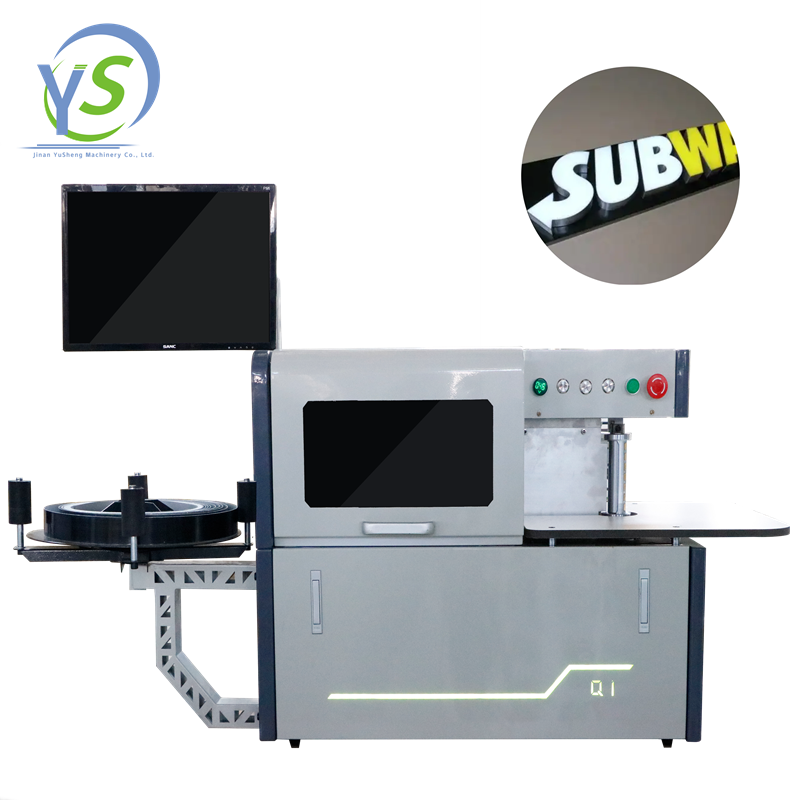
What Makes Good Channel Letter Signage for Retail?
Retail store signage faces harsh real‑world conditions. Channel letters must have crisp, uniform bends, clean seam joints, and precise letter contours. Poor bending creates visible gaps, twisted profiles, and weak structural joints. These flaws show up clearly on street‑facing facades.
Retail customers also expect variety. Sign shops need to produce mixed font styles, custom logos, variable letter depths, and different aluminum gauge thicknesses. Manual bending heavily depends on operator skill. Quality drops when staff fatigue sets in, and replicating the same letter shape across large orders becomes difficult.
Core Challenges Faced by Sign Manufacturers
Signage fabricators constantly balance three critical factors: quality, speed, and production cost.
Manual channel letter bending brings several recurring headaches:
- High material waste from trial‑and‑error bending
- Long lead times for large retail signage projects
- Quality inconsistency between different operators
- Difficulty reproducing complex curves and tight corners
- Higher labour cost for skilled bending workers
When a retail chain orders dozens of matching store signs, minor inconsistencies on each location add up to an unprofessional brand look. Rework eats profit margins and delays delivery deadlines.
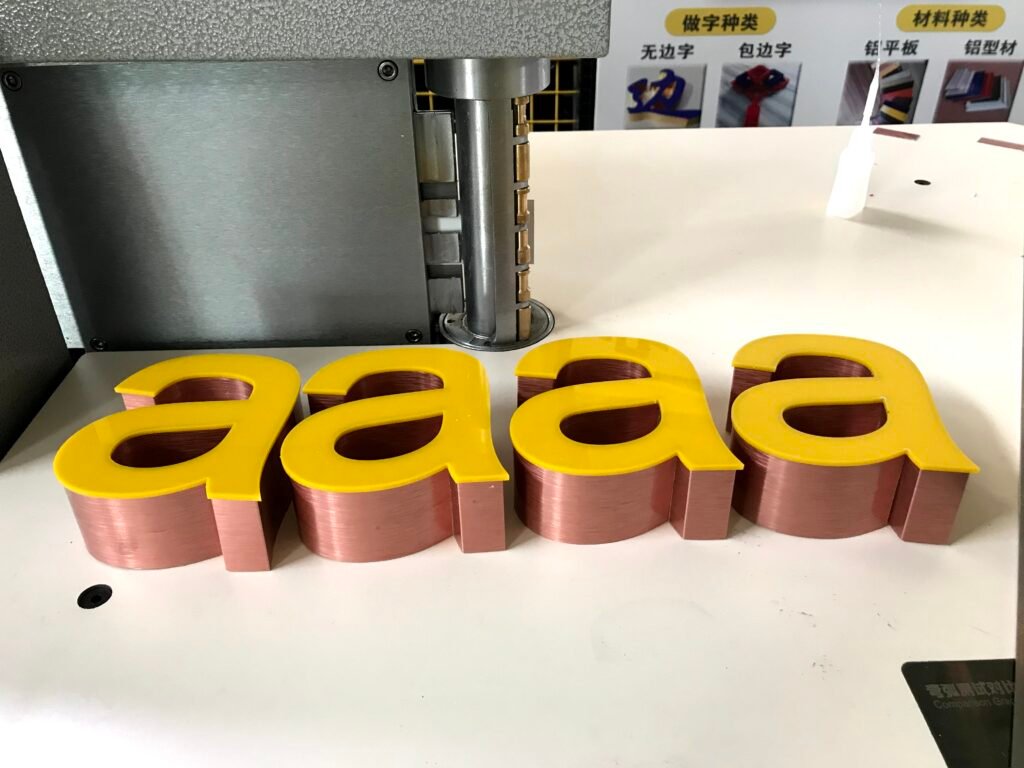
How an Automatic CNC Bending Machine Improves Channel Letter Output
Automatic CNC bending machines automate the profile forming process for channel letter aluminum. Operators input letter drawings into the control system, and the machine executes cutting, feeding and bending automatically.
Consistent bend quality for every retail sign
CNC‑controlled bending delivers repeatable angles and radii across every piece of aluminum profile. Sharp square corners, smooth arcs for curved fonts, and uniform letter depths stay identical batch after batch. There are no more uneven seams caused by human error. Finished channel letter shells fit perfectly for welding or riveting, reducing post‑processing work.
Cut production lead time for bulk retail orders
Retail chains frequently roll out multi‑location signage projects. Manual bending takes hours to finish a set of large channel letters. CNC automatic bending completes the same profile shapes in far less time. Shops can take on more retail jobs without expanding headcount, and hit tight client deadlines reliably.
Lower material waste and operating costs
Trial bends become almost unnecessary. The CNC system calculates bending paths in advance. Less scrap means lower aluminum consumption. Shops reduce reliance on highly‑experienced bending technicians; new operators can run the machine after basic training. Labour pressure eases, and profit margins on channel letter signage improve.
Handle complex custom retail signage requests
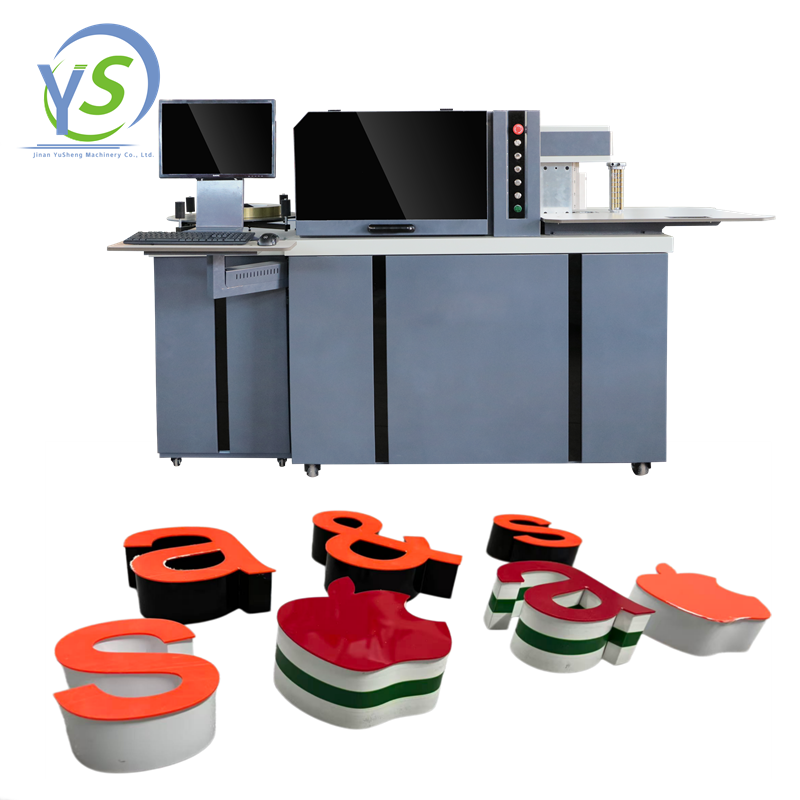
Modern retail branding uses more than standard block fonts. Irregular logo outlines, mixed straight and curved segments, variable letter depths are common client requests. An automatic CNC bending machine processes these complex geometries smoothly. Shops can accept custom orders they would previously turn down due to manual‑bending limitations.
Real‑World Fit: Who Should Invest in Automatic CNC Bending Equipment?
This equipment is not only for huge industrial sign factories. Mid‑size sign shops focusing on retail store signage gain clear advantages.
If your business regularly produces channel letters for local shops, restaurant chains, franchise outlets and shopping mall facades, a CNC bending machine delivers tangible returns. Even smaller fabricators can upgrade part of their workflow: keep manual work for tiny one‑off samples, and use CNC for volume retail orders.
Many sign business owners worry about equipment return‑on‑investment. Consider your actual cost drivers: wasted aluminum, overtime labour, rework hours, and lost orders from slow delivery. For shops doing steady channel‑letter output, the machine pays itself off over time through saved costs and expanded order capacity.
Practical Tips Before Purchasing Your CNC Bending Machine
Not every automatic bending unit works equally well for channel letter making. Keep these practical points in mind during supplier evaluation:
- Confirm compatibility with aluminum profiles commonly used for retail channel letters. Check supported material thickness and maximum bending width.
- Verify software compatibility: can it import common DXF files directly from your sign design software? Smooth file import saves lots of manual data entry time.
- Ask about after‑sales service: on‑site commissioning, operator training, and spare‑parts availability directly impact daily production.
- Compare actual production speed alongside listed technical parameters. Real‑world throughput matters more than theoretical specification numbers.
Final Thoughts
Retail store signage remains a high‑demand segment for sign manufacturers. Clients want precise, clean‑looking channel letters delivered on schedule. Manual bending cannot reliably scale up to meet modern market expectations.
Investing in an automatic CNC bending machine is not just buying fancy new hardware. It is a workflow upgrade that stabilizes product quality, speeds up order fulfillment, lowers waste, and unlocks more complex custom retail signage jobs. For sign shops wanting to stay competitive in channel letter making, this equipment has become a worthwhile strategic choice.
If you are still relying heavily on manual profile bending, it may be time to evaluate whether CNC‑automated forming fits your shop’s growth goals.

