
In the competitive world of aluminum fabrication, precision is everything. Whether you’re manufacturing high-end windows and doors or complex architectural curtain walls, the quality of your cuts directly impacts the quality of your final product.
For years, many workshops relied on manual measuring and positioning. It was slow, prone to human error, and difficult to scale. Enter the CNC positioning rack for aluminum profile cutting saws. This technology has transformed from a luxury into a necessity for modern fabrication shops.
But what exactly does it do, and why is it a game-changer for your production line?
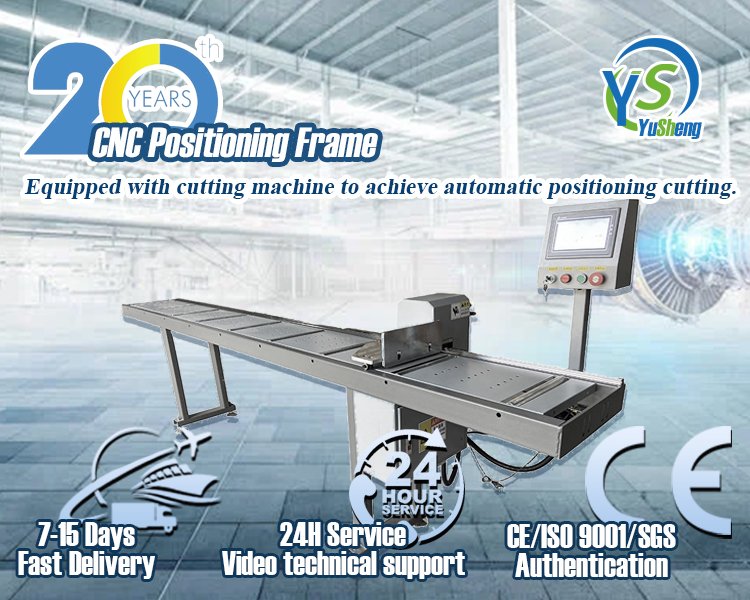
What is a CNC Positioning Rack?
At its core, a CNC positioning rack is an automated guidance system attached to a cutting saw. Instead of an operator manually pulling a tape measure and adjusting a stop block, the CNC system takes over.
It utilizes high-precision servo motors and linear guides to move the aluminum profile into the exact required position before the blade even touches the material. It is the bridge between your digital design and the physical product, ensuring that what is on the screen is exactly what ends up on your workbench.
Why You Need High-Precision Positioning
The shift from manual to CNC positioning isn’t just about speed; it’s about accuracy. When you are cutting angles for miter joints, a deviation of even a fraction of a millimeter can result in visible gaps or structural weakness.
Here is why upgrading your positioning system is critical:
- Eliminating Human Error: Manual measuring is tiring. After hours of work, eyes get tired, and mistakes happen. A CNC system doesn’t get fatigued.
- Repeatability: If you need to cut 500 identical frames, a CNC positioning rack ensures that every single one is indistinguishable from the last.
- Handling Complexity: Modern designs often require complex cuts with varying lengths and angles. Programming these into a CNC system is faster and safer than trying to set them up manually.
Key Features That Drive Efficiency
A high-quality CNC positioning system is more than just a motorized ruler. It integrates several technologies to ensure smooth operation.
1. Servo Motor Precision
The heart of the system is the servo motor. Unlike standard motors, servos allow for precise control of position, velocity, and torque. This allows the positioning rack to move quickly to the general area and then slow down for a “creep” speed to hit the exact target coordinate, often with a tolerance of ±0.05mm or better.
2. Automated Clamping
Positioning is useless if the material moves during the cut. Advanced positioning racks work in tandem with pneumatic or hydraulic clamps. Once the profile is in position, these clamps engage automatically to hold the aluminum firmly in place, preventing any slippage or vibration during the sawing process.
3. Intelligent Software Integration
Modern systems allow operators to input data directly via a touchscreen interface. You can input multiple sets of dimensions—sometimes hundreds of different cuts—and the machine will cycle through them automatically. Some systems even integrate with optimization software to minimize waste.
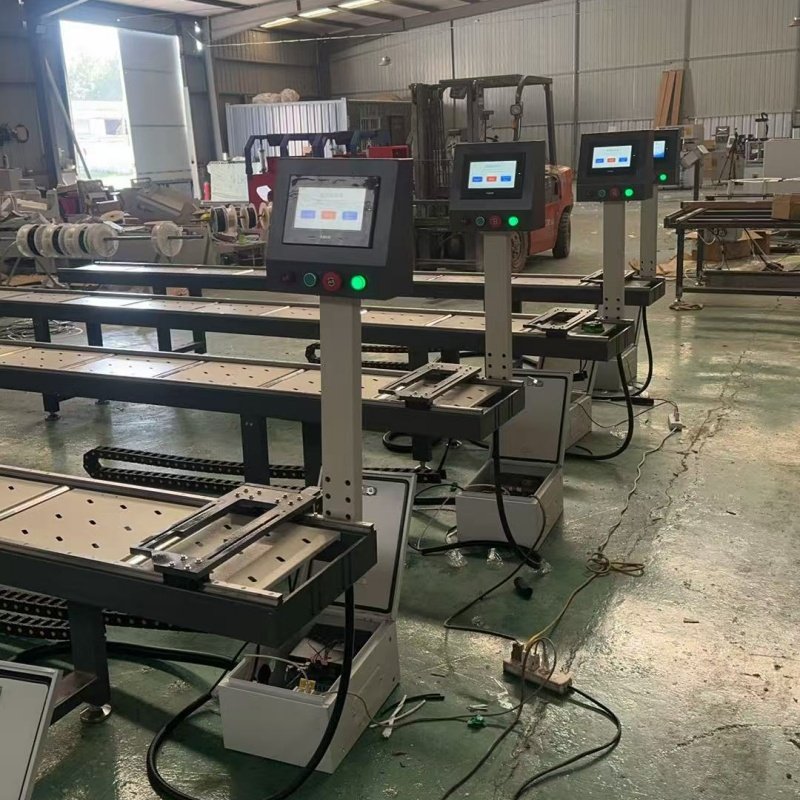
Real-World Applications
Where does this technology make the biggest impact?
- Window and Door Manufacturing: This sector demands high precision. A poorly cut corner means a drafty window. CNC positioning ensures tight seals and perfect frames.
- Curtain Wall Construction: These large-scale architectural skins require hundreds of unique aluminum profiles. The ability to program complex sequences is essential here.
- Automotive and Rail: Aluminum is increasingly used in transportation for lightweighting. These industries require strict adherence to tolerances, which manual cutting simply cannot guarantee.
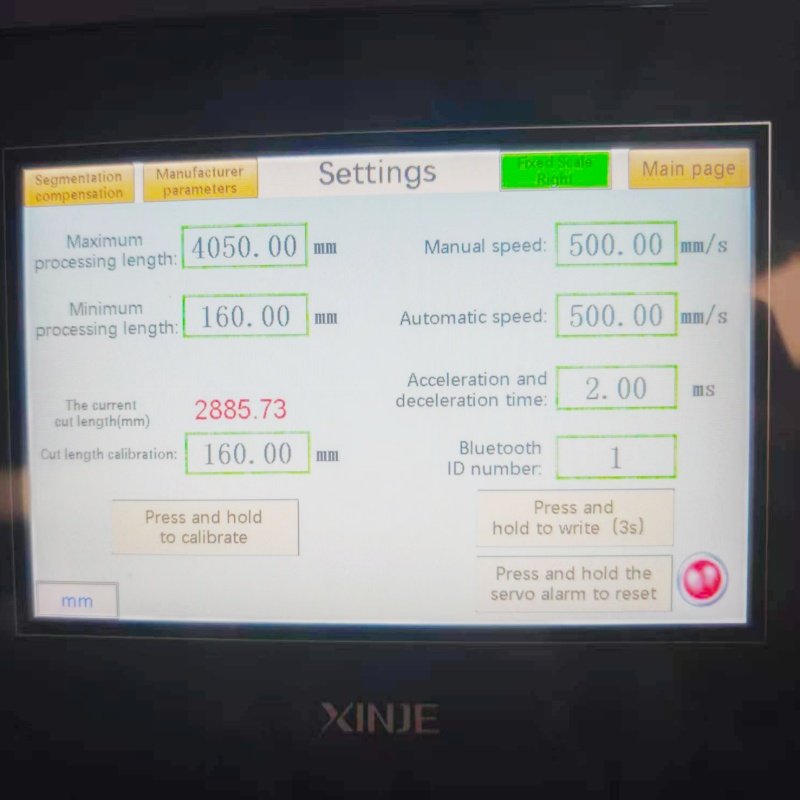
Choosing the Right System
When looking for an aluminum cutting saw with a CNC positioning rack, keep an eye on the repeatability rating. While cutting accuracy is important, repeatability tells you if the machine can hit the same spot over and over again. Look for machines with a repeatability of ≤0.02mm for high-end fabrication.
Also, consider the speed of positioning. A good system will optimize the travel path to save time, moving faster for long distances and slower for fine adjustments.
Conclusion
The CNC positioning rack is the silent hero of the aluminum cutting saw. It removes the guesswork from fabrication, reduces material waste caused by errors, and significantly boosts production output.
In an industry where margins are tight and quality expectations are high, automating your positioning process isn’t just an upgrade—it’s a strategic investment in the future of your business.

