
Precise profile cutting is the foundation of high-quality system aluminium windows. Even minor cutting errors lead to uneven joints, poor sealing, assembly delays, and defective finished windows.
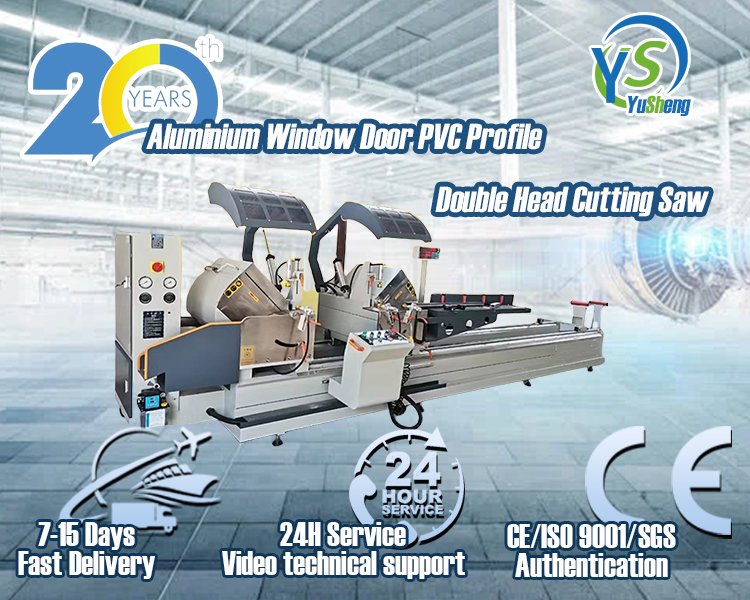
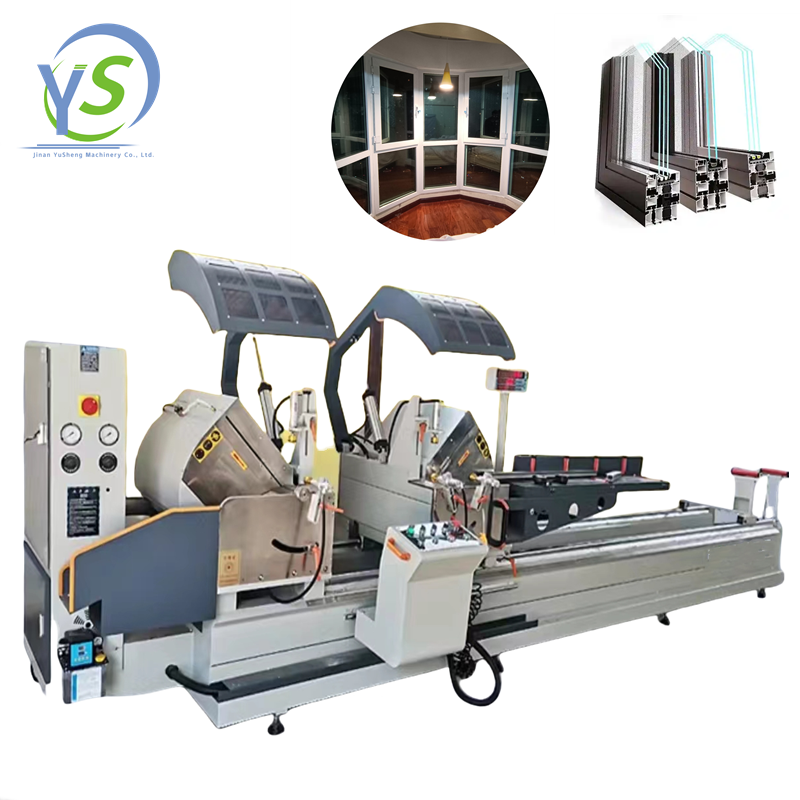
For window fabricators, the aluminium PVC double mitre saw machine is the core equipment for processing aluminium and PVC window profiles. Its cutting accuracy directly determines the fitting precision and overall durability of system windows.
In this practical guide, we share actionable, field-tested methods to boost cutting accuracy for system aluminium windows with a double mitre saw. These tips help reduce scrap rates, standardize production, and deliver perfectly fitted window profiles every time.
Why Cutting Accuracy Matters for System Aluminium Windows
System aluminium windows rely on standardized profile splicing and tight tolerance control. Unlike ordinary casement windows, system windows require strict angle and dimensional consistency to ensure waterproofing, air tightness, and structural stability.
A tiny angular deviation or length error will cause:
- Misaligned 45° mitre joints
- Gaps between assembled profiles
- Failed pressure resistance and sealing performance
- Increased rework and material waste
This is why professional window factories always prioritize accuracy calibration for their aluminium PVC double mitre saw machine before batch production.
1. Calibrate Saw Head Angles Regularly (45° & 90°)
Angle deviation is the top cause of inaccurate aluminium window cutting. Long-term operation, vibration, and load wear will shift the saw head position gradually.
For system aluminium window production, 45° mitre cutting and 90° straight cutting are the most common processes. The standard allowable error is controlled within ±10′ to ensure seamless profile splicing.
Quick calibration steps:
Cut a standard aluminium test profile, then measure the cutting surface with a precision angle ruler. If the angle is out of tolerance, adjust the limit screw on the positioning stop. After fine-tuning, retest and lock the fixing nut to stabilize the saw head position.
We recommend full angle calibration once a week for continuous mass production, and re-calibration after equipment vibration or part replacement.
2. Replace and Maintain Saw Blades Timely
Dull or damaged saw blades produce burrs, uneven cuts, and profile chipping, which seriously affect the flatness of aluminium window joints.
High-quality carbide-tipped blades are essential for cutting hard aluminium alloy profiles and rigid PVC profiles. Blades with worn teeth or sticky aluminium chips will lose cutting stability.
Maintenance tips:
- Clean blade surface aluminium and PVC residues daily after work
- Check for tooth wear and deformation every two weeks
- Replace severely worn blades immediately to avoid batch defective products
A sharp, clean blade ensures burr-free cuts and consistent dimensional accuracy for all system window profiles.
3. Optimize Profile Clamping and Positioning
Slight profile displacement during cutting is a hidden cause of size inconsistency. Many fabricators overlook clamping stability, resulting in uneven batch cutting accuracy.
When using an aluminium PVC double mitre saw machine, improper clamping pressure is a common problem. Excessive pressure deforms thin aluminium profiles, while insufficient pressure leads to micro-shifting during sawing.
Best practices:
- Clean the workbench and clamping pads to remove dust and metal chips
- Adjust moderate clamping pressure according to profile thickness
- Use wear-resistant flat pads to protect profiles and ensure stable fixing
- Avoid manual leaning or touching profiles during cutting
4. Standardize Operation and Batch Sampling Inspection
Irregular manual operation is a key factor in unstable cutting accuracy. Different operators’ feeding speed and positioning habits cause inconsistent finished profile sizes.
Establish unified operating standards for the double mitre saw: fixed feeding speed, unified positioning reference, and standardized cutting sequence.
Meanwhile, conduct sampling inspection every 20–30 profiles during batch production. Timely detect minor accuracy deviations and adjust equipment parameters to avoid large-area scrap.
5. Daily Equipment Maintenance to Sustain Long-Term Accuracy
Precision cutting relies on long-term stable equipment performance. Daily maintenance can effectively avoid accuracy degradation caused by mechanical aging and wear.
Focus on these key parts of thealuminium PVC double mitre saw machine:
- Clean guide rails and keep them lubricated to ensure smooth movement of saw heads
- Check the tightness of all fixing bolts and limit stops
- Remove accumulated metal and PVC chips inside the machine body
- Regularly calibrate the digital display positioning system
Good maintenance keeps the machine’s original precision for years and greatly reduces failure and rework rates.
Final Thoughts
Improving cutting accuracy for system aluminium windows is not about complex skills, but about standardized operation, precise calibration, and persistent equipment maintenance.
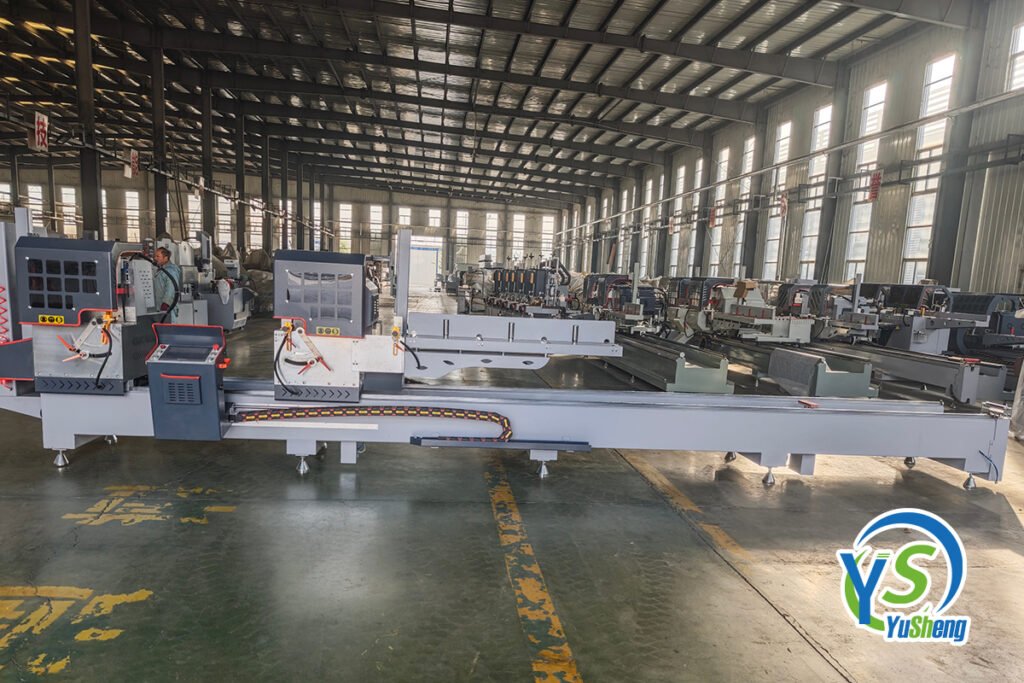
A well-maintained aluminium PVC double mitre saw machine, paired with scientific production processes, can effectively guarantee consistent angle and dimensional accuracy for system window profiles. This helps window manufacturers produce high-precision, high-sealing system windows and improve overall market competitiveness.

