
In the world of architectural metalworking and fenestration manufacturing, precision is everything. Whether you are fabricating high-end curtain walls or custom thermal break windows, the ability to bend profiles without distortion is a game-changer.
Today, we are diving deep into a machine that is redefining efficiency in the workshop: the Full Automatic 3-Axis CNC Aluminum/PVC/UPVC Profile Rolling Bending Machine.
If you are looking to upgrade your production line or reduce manual errors, this guide covers exactly why this machine is becoming an industry standard.
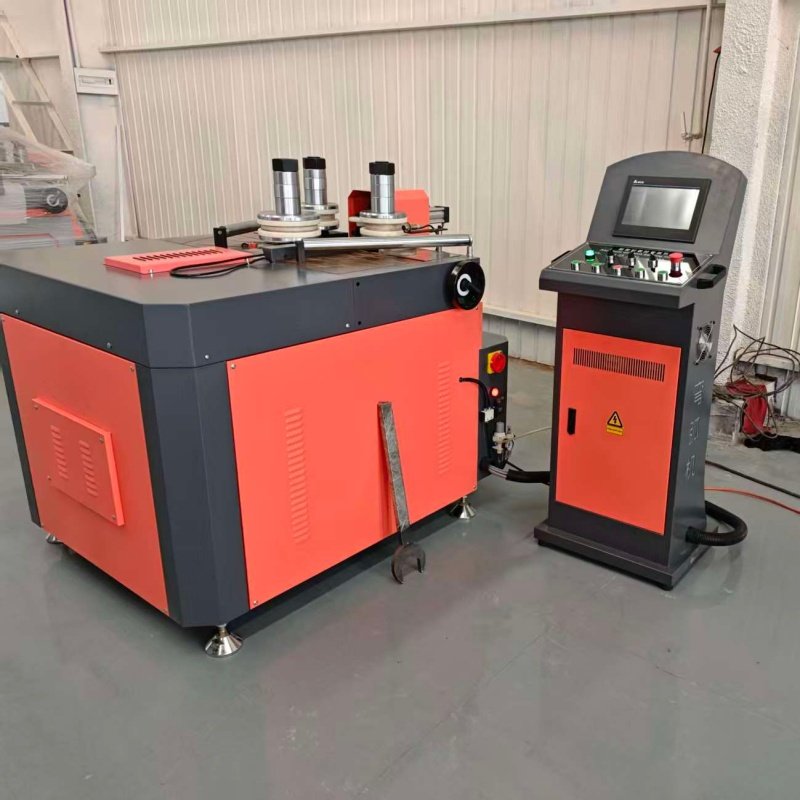
Why “3-Axis” Control Changes Everything
Traditional bending methods often struggle with asymmetrical profiles or complex curves. The beauty of a 3-axis CNC system lies in its ability to control the movement of the rolls independently.
By forming a “closed space” in the deformation area, the three-roll control system ensures that the profile is guided precisely. This minimizes the dreaded “twist” or cross-sectional deformation that often plagues aluminum and steel bending.
Key Takeaway: It’s not just about bending; it’s about maintaining the structural integrity of the profile throughout the curve.
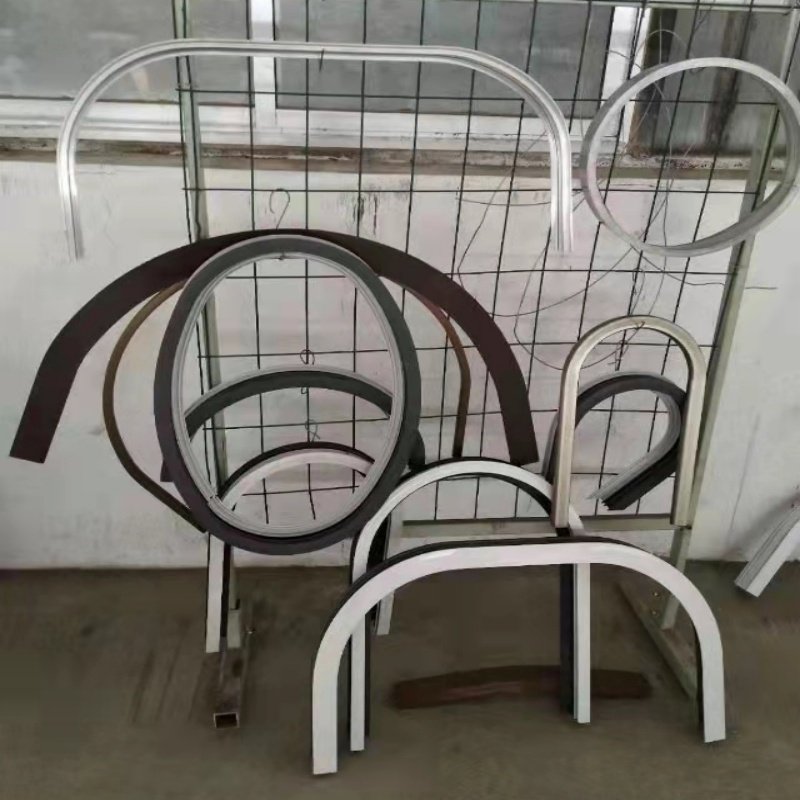
Versatility: One Machine, Infinite Possibilities
One of the standout features of this equipment is its adaptability. In a modern workshop, floor space is premium real estate. You cannot afford a machine that only does one thing.
This rolling bending machine is engineered to handle a vast array of materials:
Aluminum & Aluminum Alloys: Perfect for window and door profiles.
Stainless Steel & Iron: For heavy-duty structural applications.
Copper: For specialized decorative elements.
Plastics (PVC/UPVC) & Thermal Break Profiles: Essential for modern energy-efficient construction.
Design Freedom From C-shaped and U-shaped bends to full circles, ellipses, S-curves, and even bread-shaped arcs, the machine’s computerized control allows you to execute complex designs with repeatability.
Tackling the “Springback” Challenge
Every metalworker knows the frustration of springback—the tendency of metal to return slightly to its original shape after being bent.
This machine features an ultra-low pressure self-test rebound system. In simpler terms, the machine intelligently calculates and compensates for the material’s elasticity. This results in a minimized rebound volume, ensuring that the final radius matches your digital specifications perfectly.
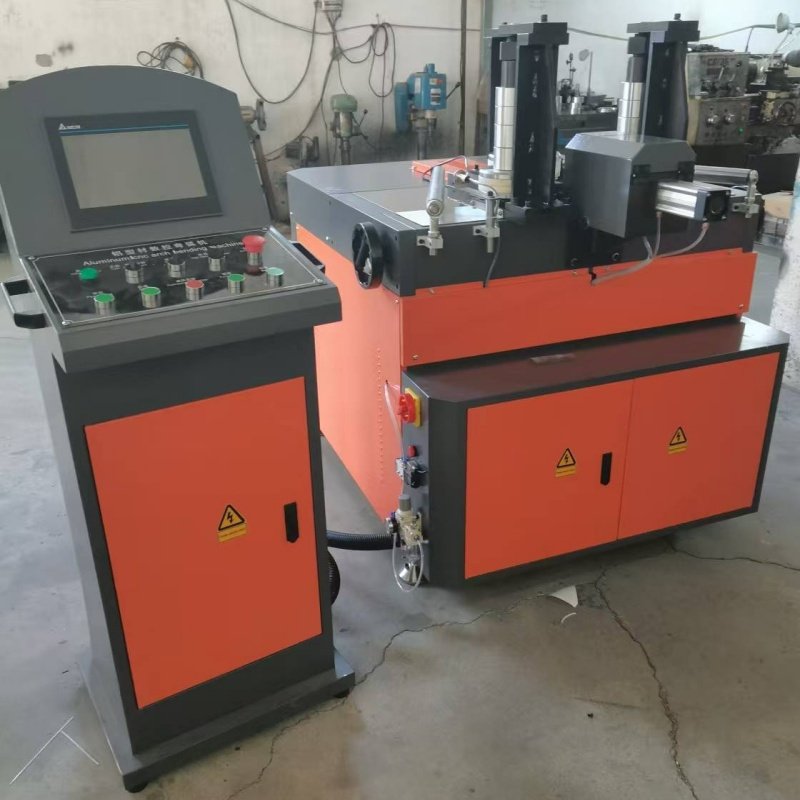
Built for Stability and European Standards
Durability is non-negotiable in heavy industry. This machine is built with high-strength mechanical rigidity, ensuring it runs stably even in complex, high-volume environments.
Furthermore, the product performance is designed to meet European advanced CNC bending machine standards. This means you aren’t just getting a machine; you are getting a piece of equipment that aligns with global quality and safety benchmarks.
Operational Highlights:
Computerized Control: Simplifies operations, making it accessible even for operators who are not master craftsmen.
Special Molding Software: Streamlines the workflow from design to production.
Reliable Rigidity: Capable of withstanding the stress of bending tough metals like stainless steel.
Summary of Technical Capabilities
To summarize, if you are dealing with aluminum profiles, thermal insulation bridges, or diverse metal shapes, this 3-Axis CNC bender offers the perfect blend of power and precision.
Quick Specs at a Glance:
| Feature | Benefit |
| 3-Axis CNC Control | Precise movement and repeatability. |
| Rebound System | Drastically reduces material springback. |
| Material Range | Handles Alu, Steel, Copper, PVC, and Thermal Break profiles. |
| Shape Versatility | C, U, Elliptical, S-Shape, and Full Circles. |
| Standard Compliance | Meets European advanced standards. |

Investing in a machine that combines automatic numerical control with robust mechanical strength is the key to scaling your manufacturing capabilities in 2026 and beyond.

