
In the fast-paced world of aluminum profile fabrication, precision is everything. A single millimeter of error can lead to costly material waste or a failed assembly. For many workshops relying on standard cutting saws, the bottleneck isn’t the blade—it’s the manual process of measuring and positioning. This is where a CNC positioning frame transforms the game.
This auxiliary machine acts as an intelligent extension to your existing saw, automating the feeding process and ensuring every cut is accurate to the last decimal point. Let’s explore how this “smart stop” can revolutionize your production line
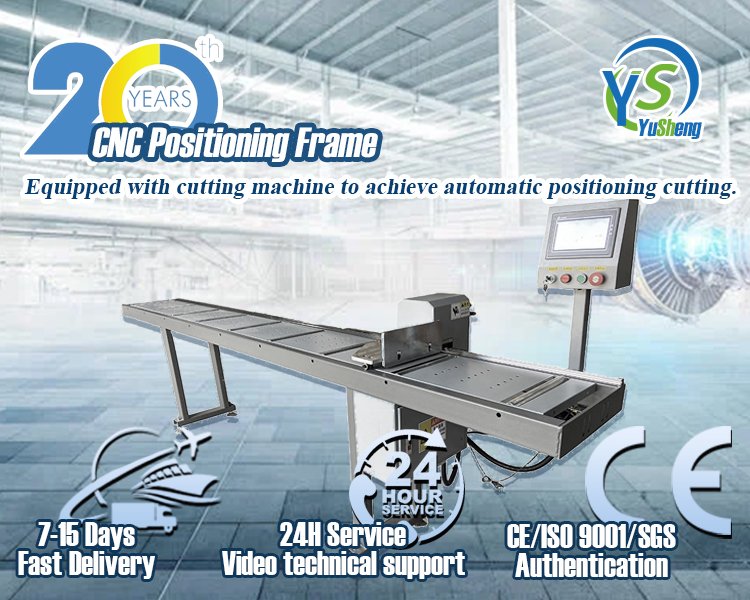
What Exactly Is a CNC Positioning Frame?
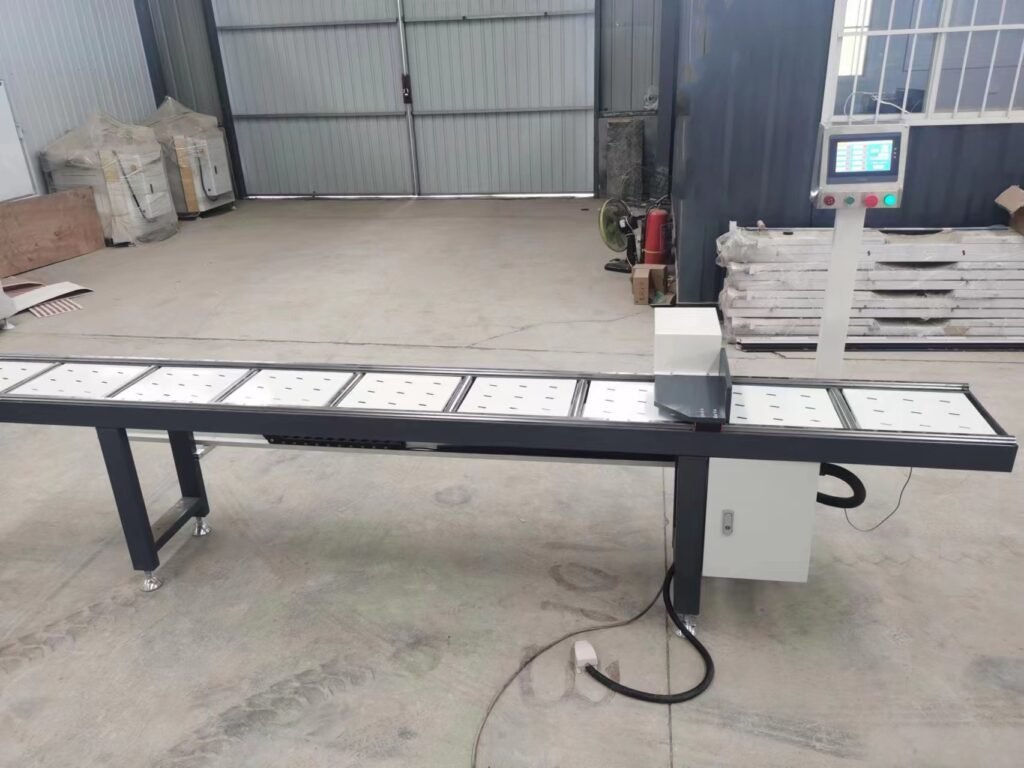
Imagine a highly skilled assistant who never gets tired and always measures perfectly. That is essentially what a CNC positioning frame does. It is a motorized support system equipped with a back gauge that moves automatically based on digital inputs. Instead of an operator manually pulling a tape measure for every single piece, they simply input the desired length into the control panel, and the frame positions the aluminum profile instantly.
By integrating this device, you effectively upgrade a basic saw into a sophisticated, semi-automated cutting center without the massive capital investment of a full CNC machining hub.
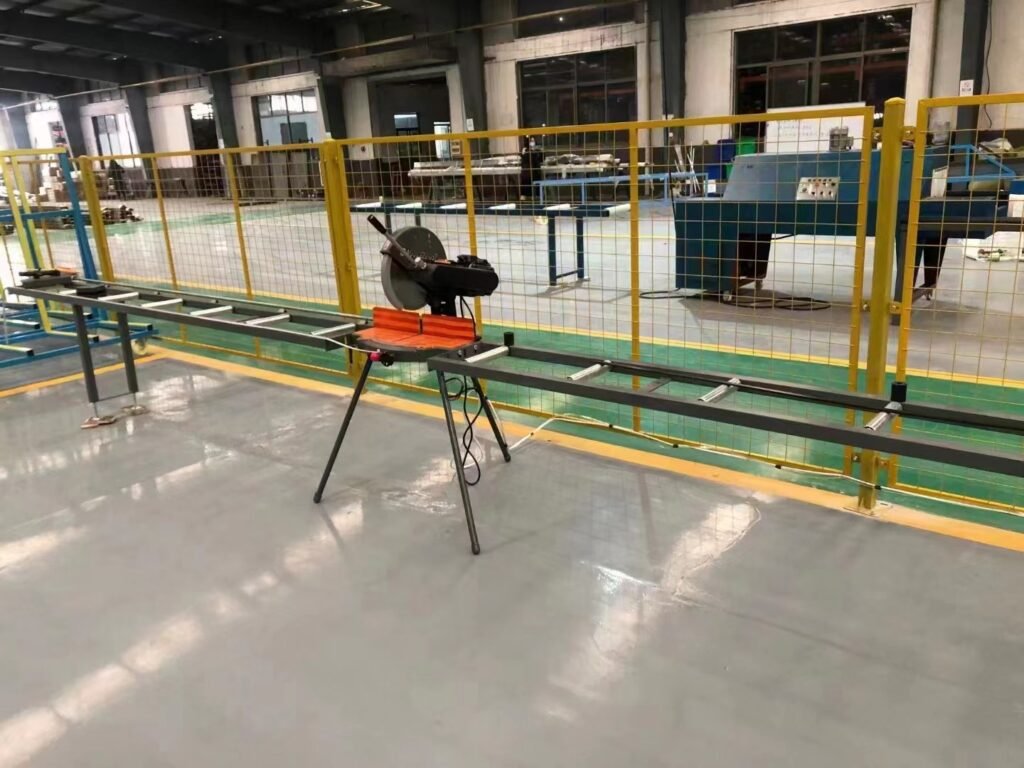
Why Your Workshop Needs One: Key Benefits
The shift from manual to automated positioning offers immediate, tangible benefits for any fabrication business.
Unmatched Precision and Consistency
Human error is inevitable when measuring hundreds of pieces a day. A CNC positioning frame eliminates this variable. Using high-precision linear guides and servo motors, these machines achieve repetitive positioning accuracy often within ±0.2 mm. Whether you are cutting one piece or a thousand, the dimensions remain identical, ensuring perfect fits during assembly.
Drastic Efficiency Gains
Speed is critical in manufacturing. With a positioning frame, the time-consuming task of marking and measuring is removed. The system can rapidly adjust to different lengths, allowing for high-speed repetitive cutting. For complex jobs requiring a list of different sizes, the machine can execute a pre-loaded program, adjusting the back gauge automatically between cuts. This continuous workflow significantly boosts daily output.
Reduced Material Waste
Inaccurate cuts mean scrapped profiles and lost profit. By guaranteeing that every cut is precise, a CNC positioning frame minimizes errors that lead to waste. Furthermore, optimized cutting sequences ensure that you get the most out of every length of stock material.
Ease of Use and Integration
Modern units are designed with user-friendliness in mind. They feature intuitive industrial PC interfaces where operators can easily input dimensions or upload cutting lists via USB. Some advanced models even support data integration from CAD software, creating a seamless digital workflow from design to production.
Final Thoughts
Investing in a CNC positioning frame is not just about buying a machine; it is about investing in the reliability and reputation of your workshop. It bridges the gap between manual labor and full automation, offering a cost-effective solution to improve quality and speed. If you are looking to reduce waste and increase throughput, this might be the smartest upgrade you make this year.

