
For UPVC and plastic steel door and window manufacturers, consistent frame strength, airtight sealing, and clean finished aesthetics define product quality. Among all core processing equipment, the UPVC window welding machine stands out as the most critical device for frame forming. Unlike traditional glue bonding or mechanical assembly, professional plastic steel welding delivers seamless, durable, and dimensionally stable joints that meet modern construction and energy-saving standards.
If you are scaling up window production, upgrading old workshop equipment, or looking for reliable machinery for customized plastic steel door fabrication, this guide will walk you through everything you need to know about UPVC welding machines, including their working principle, machine types, key benefits, and practical selection tips.
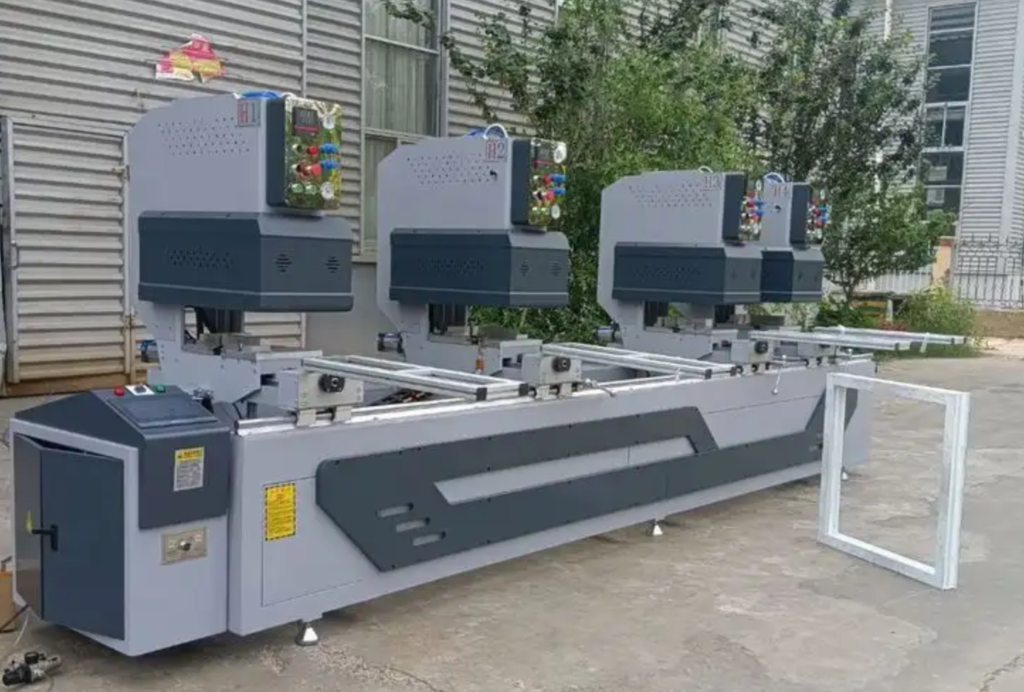
How Does a UPVC Window Welding Machine Work?
The working logic of a plastic steel door and window welding machine is simple, efficient, and chemical-free. It relies on hot melt fusion and pneumatic pressure bonding to connect UPVC and PVC profiles perfectly, eliminating the need for adhesives, screws, or auxiliary fasteners.
Equipped with high-temperature Teflon-coated heating plates, the machine heats the cut ends of plastic steel profiles at a constant temperature ranging from 200°C to 350°C. The Teflon coating effectively prevents profile sticking and ensures smooth welding surfaces. Once the profile ends reach an ideal molten state, the heating plate automatically retracts. The precision pneumatic system then presses the softened profile ends tightly together. After a short cooling and shaping process, the two profiles integrate into a solid, seamless whole.
The standard working cycle follows a mature and stable sequence: Positioning → Clamping → Heating → Fusion → Cooling → Release. This automated process guarantees uniform welding results and avoids the uneven joints common in manual processing.
Common Types of Plastic Steel Welding Machines
Different production scales and processing requirements correspond to different welding machine models. Manufacturers can choose equipment based on daily output, product styles, and customization demands.
1. Single-Head Welding Machine
The single-head UPVC welding machine features a compact structure and flexible operation. It is specially designed for small-batch production, after-sales repair work, and special-shaped window fabrication. Unlike fixed-angle equipment, it supports adjustable welding angles from 60° to 180°, making it ideal for trapezoidal windows, arched windows, and non-standard plastic steel door frames. It is the most cost-effective option for small factories and processing workshops.
2. Double-Head Welding Machine
As the mainstream model for standard mass production, the double-head welding machine can complete double-corner welding simultaneously. It greatly improves production efficiency while maintaining high welding accuracy. Suitable for standardized flat windows and conventional door frames, it balances performance and affordability, widely adopted in medium-scale UPVC window manufacturing plants.
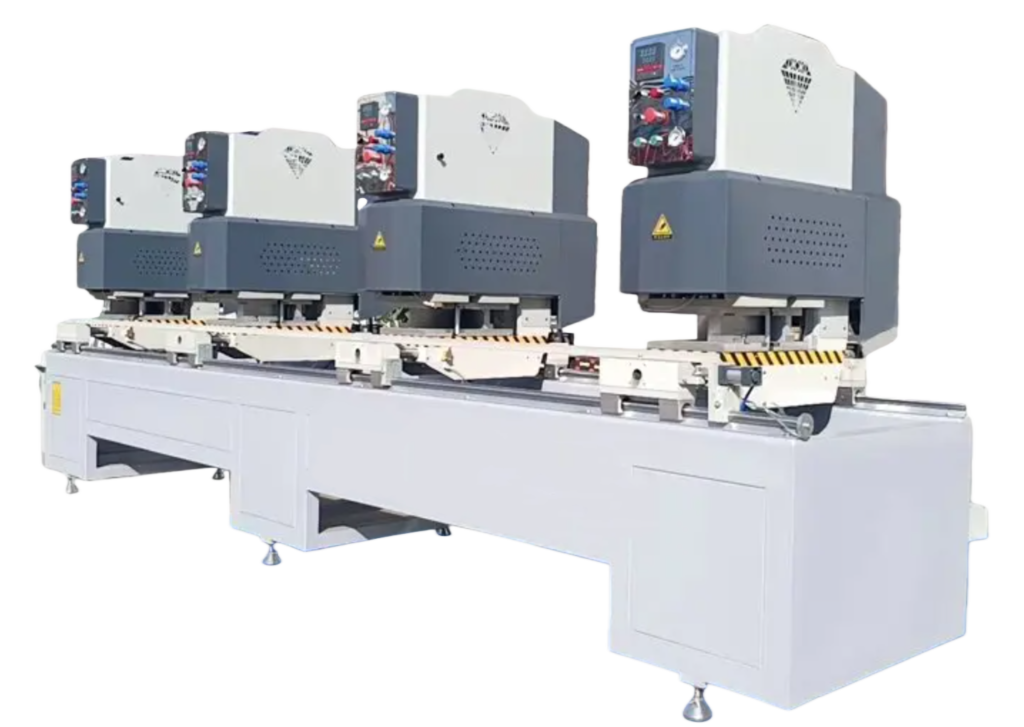
3. Four-Head Welding Machine
The four-head welding machine is high-end automated equipment for large-scale industrial production. It can weld four corners of a complete window frame in one go, realizing one-time forming of finished frames. Advanced models support 0.2mm seamless welding technology, which delivers burr-free, ultra-smooth welding seams. This is particularly suitable for colored co-extruded profiles and high-end decorative plastic steel doors and windows, helping manufacturers produce premium products with higher market value.
Key Advantages of Modern UPVC Welding Equipment
Compared with traditional processing methods, updated plastic steel welding machines bring significant improvements in product quality, production cost, and operational safety.
- Superior Welding Strength & Sealing Performance: The hot-melt integrated joint is stronger than the profile itself, effectively avoiding cracking and deformation during long-term use. The seamless welding effect ensures excellent airtight and watertight performance, which enhances the heat insulation and energy-saving effect of plastic steel doors and windows.
- High Processing Precision: Equipped with digital constant temperature control (precision ±1°C) and stable pneumatic pressure systems, the machine ensures consistent melting depth and joint tightness for every product. High-precision guide rails guarantee accurate positioning, reducing frame size errors to a minimum.
- Cost & Labor Saving: The fully automated working cycle reduces reliance on skilled workers. No glue or auxiliary accessories are required, cutting material costs and avoiding environmental pollution caused by chemical adhesives. The high-speed continuous operation greatly improves daily production capacity.
- Strong Compatibility & Flexibility: The equipment adapts to most common UPVC and PVC profiles, including white profiles, color-coated profiles, and laminated profiles. The adjustable welding height (20–120mm) and length (400–3500mm) cover most door and window specification demands.
- Stable & Safe Operation: The robust steel frame ensures long-term stable operation without vibration deviation. Multiple safety protection mechanisms such as overload protection and safety interlocks effectively reduce operational risks, suitable for long-hour industrial continuous production.
Main Applications of Plastic Steel Welding Machines
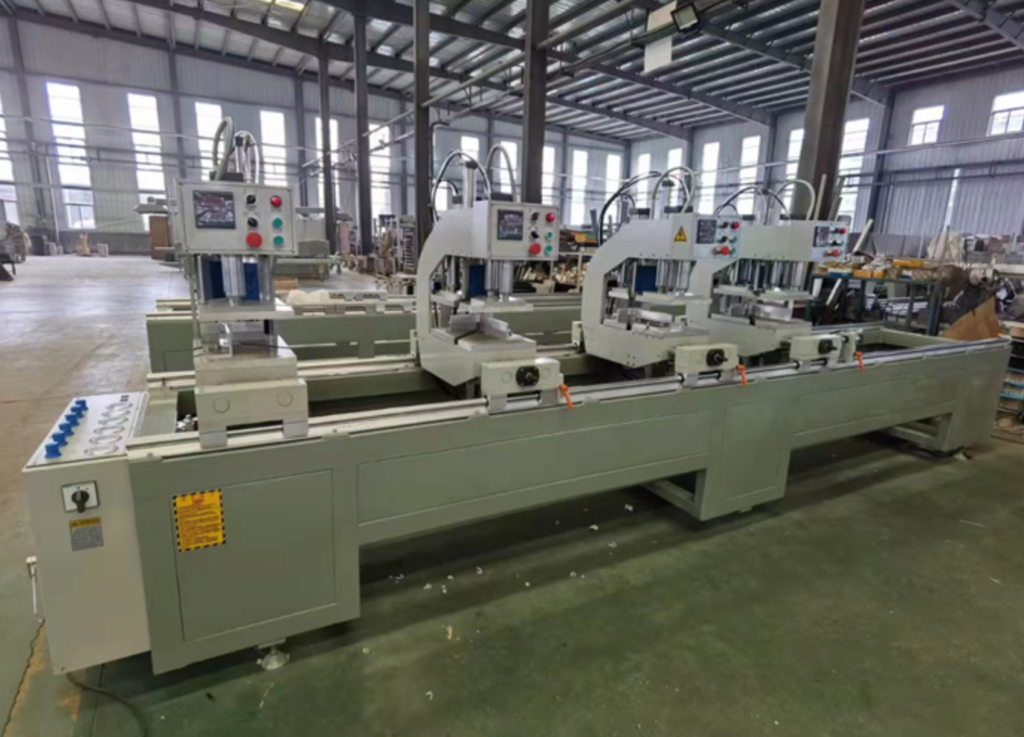
UPVC window welding machines are widely used in the construction and decoration industry, covering almost all plastic steel profile processing scenarios. They are mainly applied in the mass production of UPVC door frames, window sashes, and mullion profiles. Meanwhile, they support customized processing of special-shaped windows, architectural curtain wall profiles, and non-standard plastic steel decorative components. Whether for residential building supporting doors and windows or commercial engineering decoration projects, this equipment can deliver stable and reliable processing results.
Final Thoughts
In the competitive UPVC door and window manufacturing industry, equipment accuracy and stability directly determine product quality and market competitiveness. A high-quality UPVC window welding machine not only improves production efficiency and reduces operating costs but also ensures consistent finished product sealing, aesthetics, and durability.
From small-batch customized processing to large-scale automated production lines, different types of plastic steel welding machines can match diverse production needs. Choosing the right welding equipment is the first key step to upgrading your plastic steel door and window manufacturing business.

