
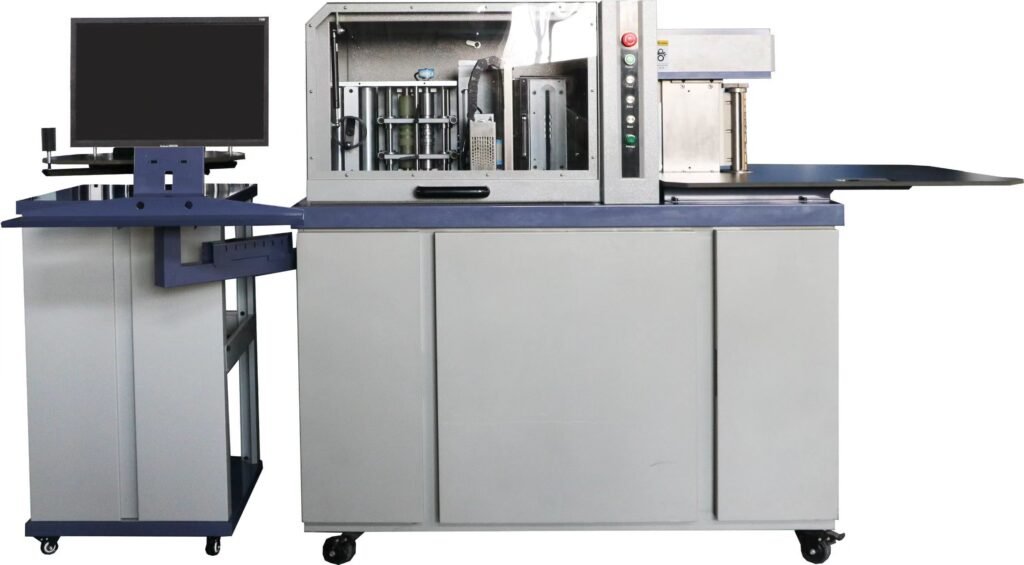
If you’ve been in the sign-making business for more than a hot minute, you know the drill. The client wants something flashy, but it has to be durable. They want custom, but they need it yesterday. For years, fabricating dimensional letters meant wrestling with inconsistent bends, material waste that hurt the bottom line, and hours of manual finishing.
Then CNC technology stepped in and changed the game entirely.
Today, we’re pulling back the curtain on the workhorse of modern sign shops: the CNC channel letter bending machine. Whether you’re bending aluminum edges for the first time or you’re looking to upgrade your shop floor, here’s what you need to know about getting the perfect glow.
What Can You Actually Make With These Machines?
Let’s clear something up right away. A quality CNC bender isn’t a one-trick pony. If you’re investing in shop equipment, you need versatility. Modern machines handle a massive range of products that keep storefronts looking sharp.
You’re looking at fabricating:
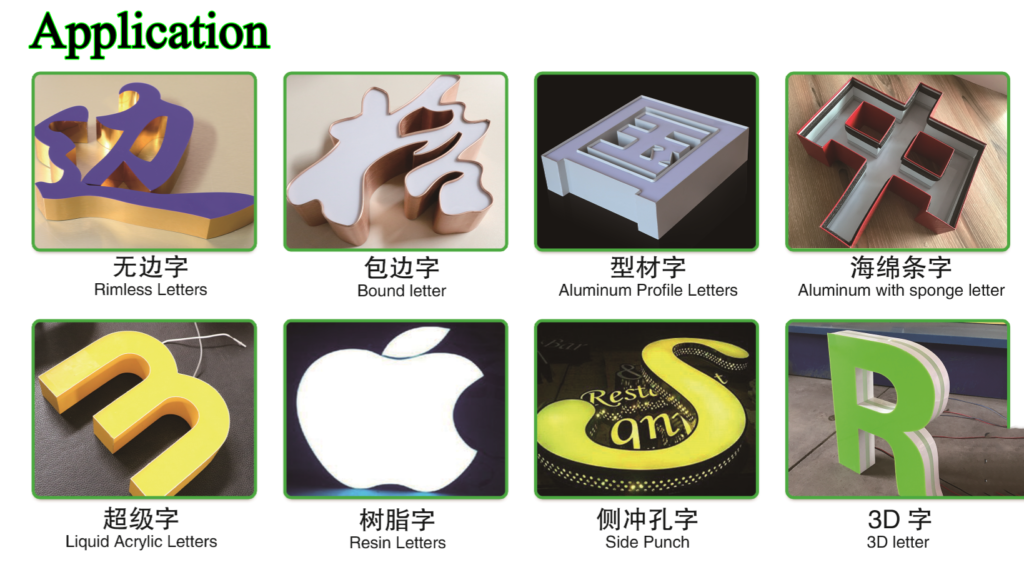
- Aluminum edge letters for classic channel letters
- Resin luminous letters (that smooth, glossy look)
- Super letters, sometimes called liquid acrylic letters
- Aluminum profile letters with clean, extruded edges
- Sponge-backed aluminum letters for dimensional signs
- Side luminous letters where the light glows from the edges
- LED channel letters and various aluminum light-up letters
- Stainless steel letters for that premium, brushed finish
- Tin letters for vintage aesthetics
- High polymer luminous letters for lightweight durability
The bottom line? If it glows, bends, or mounts to a facade, a solid CNC bender should handle it without breaking a sweat.
The Mechanics of a Clean Bend
So, what separates a machine that fights you from one that just works? It comes down to the guts of the system.
Feeding That Doesn’t Fail
Anyone who has run a bender knows that feeding the material is where things go sideways fast. If the grip slips, your letter is scrap.
That’s where the double manipulator alternating feeding structure comes into play. Instead of one weak point gripping the material, you’ve got two manipulators working in tandem. They alternate, which keeps constant tension and stability throughout the feed. It’s like having a second pair of hands that never get tired.
And because the material clamp uses structural casting, you get a serious grip without scratching the aluminum or stainless. No marring means no extra finishing work later.
Bending Without Wrinkles
The actual bend is where the magic happens. A double-knife alternating bending structure ensures that the radius is consistent. You want high formation degree and stability, especially when you’re running a batch of the same letter style. If the first “R” is perfect and the tenth one is wobbly, you’ve got a problem. A rigid bending structure eliminates that variability.
Cutting Depth That Doesn’t Require a PhD
One of the more annoying setup tasks is dialing in the cutting depth. You tweak, you test, you tweak again. Machines with an automatic adjustment system for the planer take that headache off the table. The interface is straightforward—set it and move on. This is a massive time-saver when you’re switching between materials of slightly different thicknesses.
Maintenance (Or Lack Thereof)
Here’s a phrase you don’t hear often in a machine shop: maintenance without grinding.
The goal is zero-cost operation over time. When the planer system is engineered correctly, it should hold its edge. And when it does eventually wear? The system allows for automatic cutter adjustment. You’re not spending hours with a whetstone or constantly buying replacement blades. You’re just… running the machine.
The Brains of the Operation
Hardware is nothing without the software to drive it. You want a system that automates the tedious stuff.
A huge labor saver is automatic punch recognition. The software looks at the design, figures out where the mounting holes need to go for the neon or LED modules, and punches them without you needing to manually place marks. It’s one less step for the fabricator, which means one less chance for human error.
Keeping It Straight
Length accuracy can make or break a letter. If your return is off by a couple of millimeters, the face won’t fit, and you’re back to square one.
A length closed-loop control system is non-negotiable here. The software constantly monitors the feed and adjusts in real-time. We’re talking about error margins at ≤ 0.1 mm. That’s the difference between a letter that fits tight and one that looks sloppy.
Positioning Power
You’ll often see machines built with different drive systems. The good ones use a screw plus two rails and four sliders for positioning transmission. Compared to belt drives, this setup has greater strength. It handles the torque of heavy material without shuddering, which means the cut stays smooth even at speed.
Speaking of speed, a high-power servo control system gives you the trifecta: high precision, rapid movement, and high torque. That torque matters when you’re bending thicker aluminum or stainless. The machine doesn’t bog down; it just powers through.
Built to Last
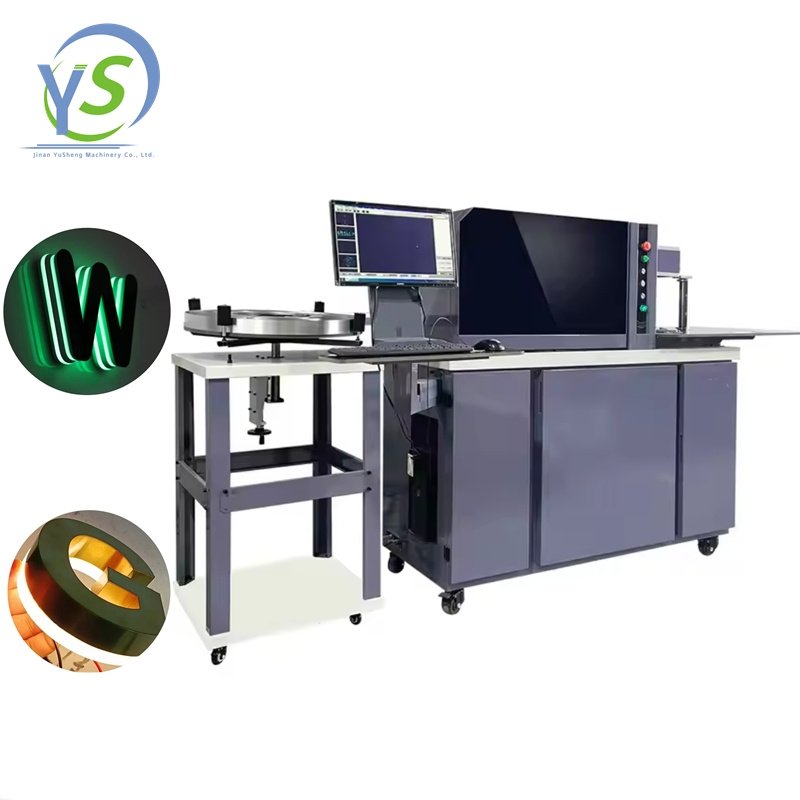
Walk onto any shop floor, and you can tell which machines are loved and which are fighting for their lives. A full chrome plating on the machine surfaces isn’t just for looks—it’s about wear resistance. Aluminum dust and debris are corrosive over time. Chrome plating helps the machine shrug off what the shop throws at it.
The Learning Curve
Let’s be real: nobody has time for a month-long training course. The best machines run on software that is simple, easy to learn, and easy to operate. You want your most experienced fabricator to be able to program a complex job, but you also want the new hire to run a batch of standard letters by the end of the week.
Professional-grade software shouldn’t mean complicated. It should mean efficient and thoughtful—prompting you for the right information and then getting out of the way so the machine can do its job.
Bringing It All Together
At the end of the day, a CNC channel letter bending machine is an investment in your shop’s capacity and reputation. When you can promise a client perfect, consistent letters—whether they’re standard aluminum returns or high-end stainless steel fabrications—you win more bids.
Look for the build quality: the double manipulators, the rigid bending structure, the closed-loop accuracy. But also look for the user experience: the easy software, the automatic tool adjustment, the durable chrome finish.
Get those elements right, and you’re not just buying a machine. You’re buying back your time and elevating your final product. And in the signage game, that’s how you stand out from the crowd.

