
Introduction
Aluminum profile bending remains a core forming process across construction, automotive, furniture and aerospace manufacturing in 2026. Traditional single-axis bending equipment can no longer meet demands for high precision, complex curved workpieces and mass customized production. As a upgraded intelligent forming solution, the three-axis CNC aluminum bending machine has rapidly become the mainstream equipment for medium and large aluminum processing factories worldwide.
Unlike basic two-axis bending units, three-axis CNC bending systems adopt independent servo control on X, Y, Z three motion axes, delivering synchronous multi-directional feeding, clamping and arc forming. This article breaks down everything buyers, factory technicians and mechanical distributors need to know before investing in a three-axis CNC bending machine this year.
1. What Is a Three-axis CNC Aluminum Profile Bending Machine?
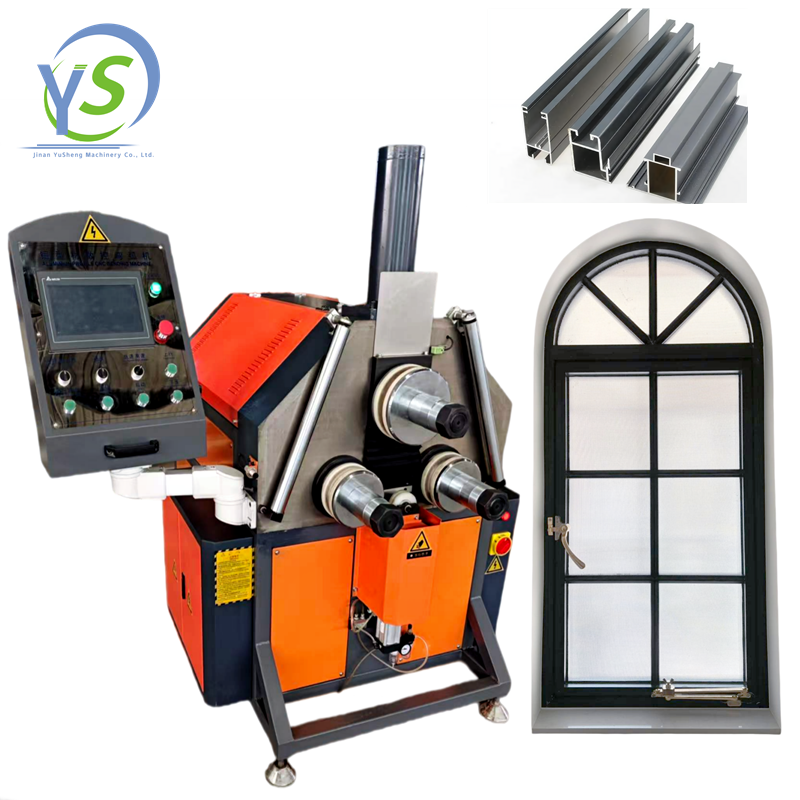
A three-axis CNC bending machine is a numerically controlled metal forming device specially engineered for solid and hollow aluminum extrusions. Its three independent servo-driven axes handle three core motions separately:
- X-axis: Horizontal feeding of aluminum profiles with precise length positioning
- Y-axis: Vertical clamping and pressure adjustment for stable fixing during bending
- Z-axis: Rotary bending head for circular arcs, elliptical curves, irregular radians and compound bends
All axis movements are synchronized via industrial CNC control systems. Operators input CAD drawings or direct radian parameters on the touchscreen; the machine automatically completes feeding, clamping and bending without repeated manual adjustment.
Standard applicable materials include architectural aluminum window frames, curtain wall mullions, automotive aluminum trim strips, solar frame extrusions, furniture aluminum tubes and industrial aluminum alloy profiles.
2. Core Advantages of Three-axis CNC Bending Machines (2026 Updated Edge)
2.1 Ultra High Forming Precision
Separate servo closed-loop control for each axis eliminates cumulative positioning errors common on single/two-axis machines. Repeated bending tolerance can stay within ±0.02mm, critical for high-end curtain wall and automotive parts that require seamless assembly.
2.2 Support Complex Custom Curves
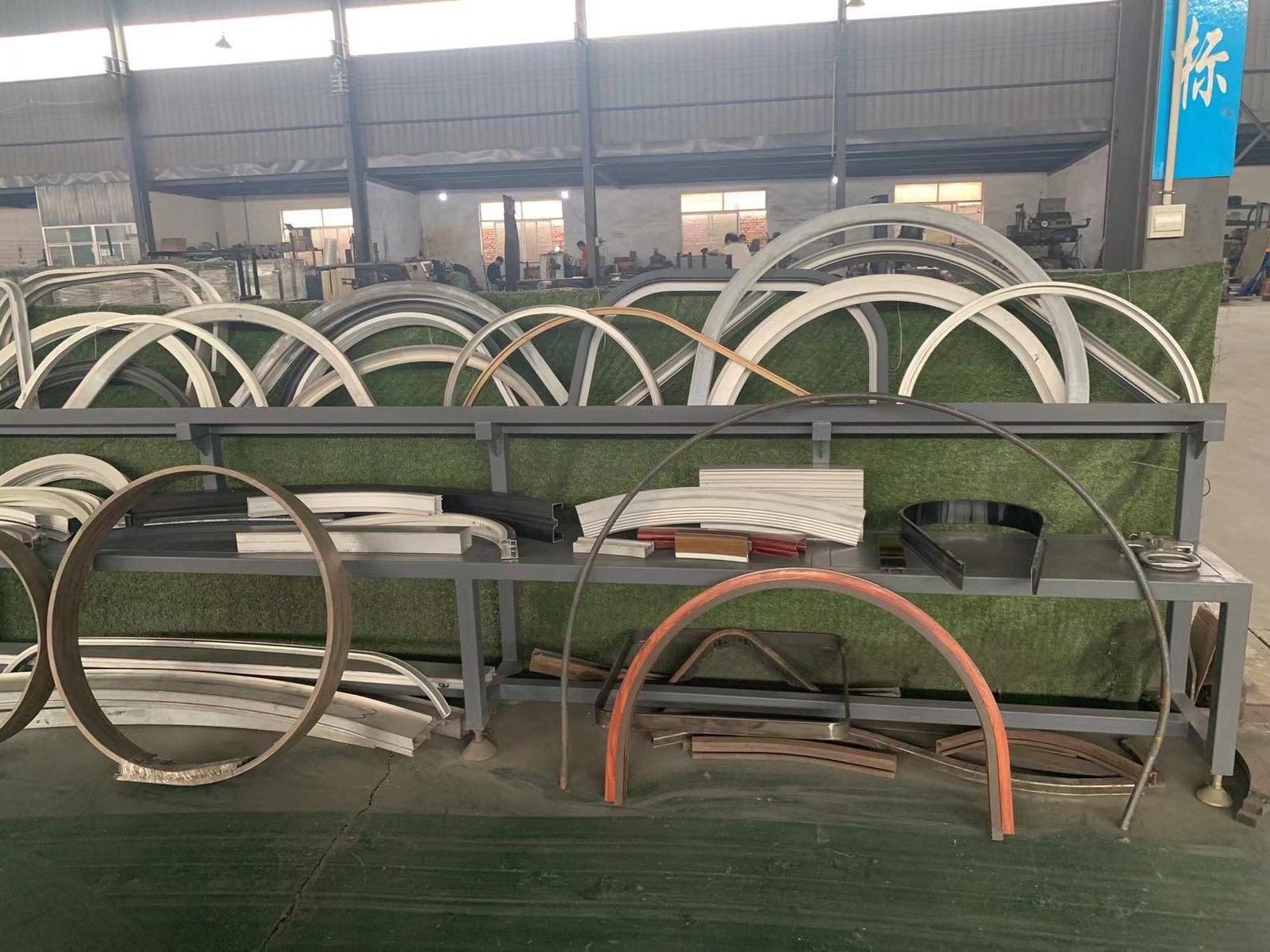
Single-axis benders are limited to simple circular arcs. Three-axis equipment handles compound shapes: unequal-radius arcs, S-curves, oval frames and spiral aluminum strips. Manufacturers no longer need secondary welding or polishing to fix deformed workpieces.
2.3 Minimal Material Waste & Low Post-processing
Uniform three-point clamping avoids profile surface scratching, indentation or twisting during cold bending. Most finished parts go straight to assembly with only light cleaning, cutting down labor and rework costs significantly.
2.4 Higher Production Efficiency for Batch Orders
Automated one-shot forming replaces multi-step manual positioning. For standard window aluminum profiles, daily output increases by 40%–60% compared to conventional bending machines, ideal for factories taking large overseas OEM orders.
2.5 Flexible Compatibility for Multiple Profiles
Quick-change bending molds fit hollow square tubes, rectangular extrusions, thin-wall decorative strips and thick structural aluminum profiles. Mold replacement takes less than 10 minutes, perfect for mixed small-batch and mass production lines.
3. Key Technical Parameters to Check Before Purchase
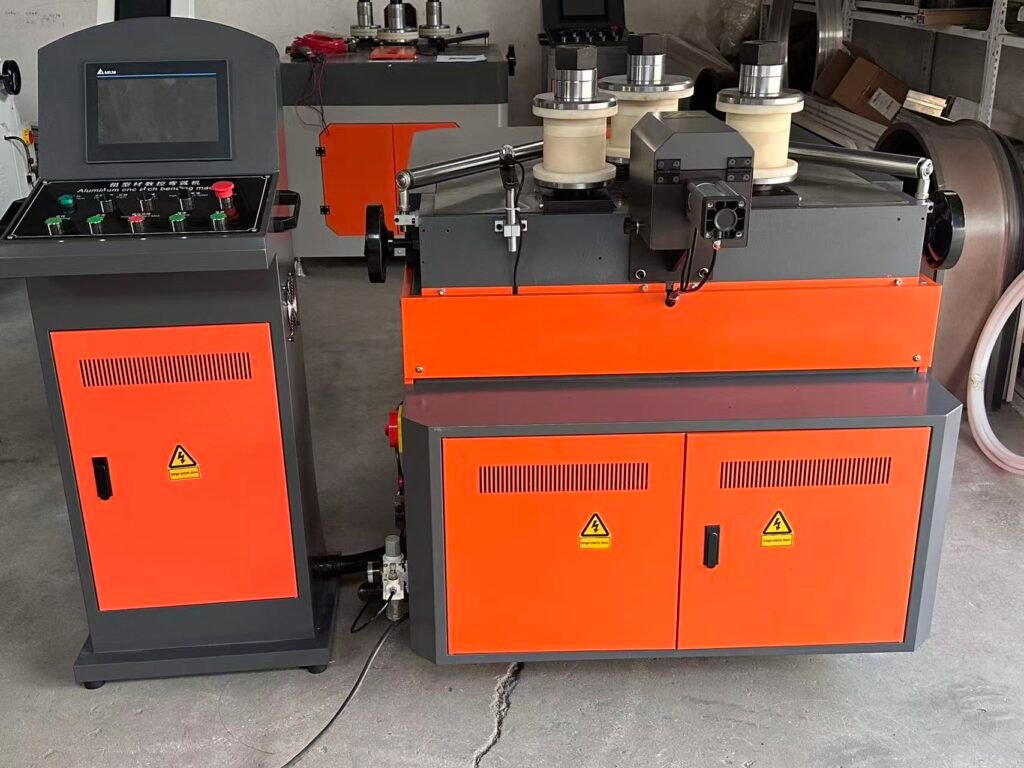
When sourcing three-axis CNC aluminum bending machines in 2026, prioritize these specs to match your production needs:
- Max bending profile section: Width × thickness range
- Effective bending length: 3000mm / 4000mm / 6000mm customizable
- Servo motor power for X/Y/Z axes
- Minimum bending radius limit
- CNC control system brand (industrial dedicated bending controller vs universal PLC)
- Material thickness tolerance support
- Total machine weight and floor space (for factory layout planning)
- Optional upgrades: automatic feeding rack, deburring attachment, CAD data import module
Small fabricators focusing on doors and windows usually select 4-meter standard models. Automotive and aerospace component manufacturers opt for heavy-duty 6-meter three-axis benders with reinforced pressure frames.
4. Main Application Industries
4.1 Architectural Aluminum Fabrication (Largest Market Demand 2026)
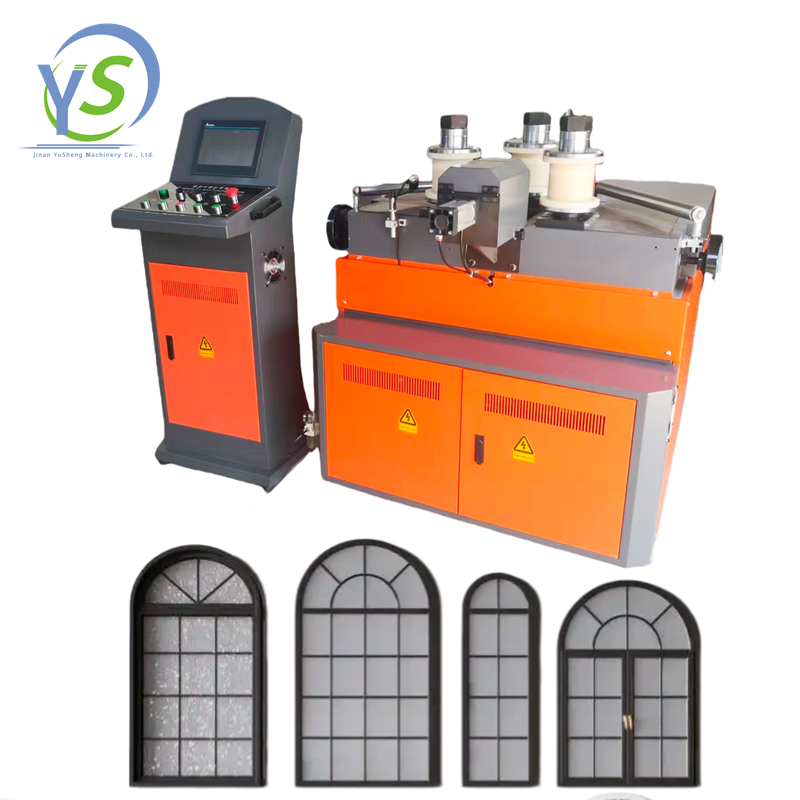
Curtain wall frames, arched window frames, sunroom aluminum profiles, balcony railings, door frame curved extrusions. High precision and scratch-free surfaces are mandatory for architectural finished products.
4.2 Automotive Manufacturing
Aluminum decorative strips, roof rack extrusions, new energy vehicle body auxiliary aluminum parts. Strict dimensional accuracy ensures consistent assembly on automated vehicle production lines.
4.3 Solar Energy Equipment
Curved solar bracket aluminum extrusions, photovoltaic frame curved beams. Three-axis bending maintains structural strength without damaging anti-corrosion coating layers.
4.4 Furniture & Decoration
Aluminum alloy table frames, curved wardrobe frames, lighting decorative aluminum strips. Delicate small-radius bending meets modern minimalist furniture design trends.
4.5 Aerospace & Industrial Equipment
Lightweight structural aluminum profiles for small aircraft, mechanical equipment protective frames, medical device aluminum supports. Tight tolerance requirements can only be satisfied by three-axis CNC bending equipment.
5. Practical Buying Guide for Global Buyers (2026 Tips)
5.1 Match Machine Size to Your Main Workpiece
Do not overspend on oversized heavy-duty machines if you only process short window profiles. Confirm your most frequently used profile length, wall thickness and minimum bending radius before requesting quotations.
5.2 Verify CNC Software Compatibility
Top-tier 2026 three-axis benders support direct DXF file import, eliminating manual parameter input. Avoid outdated systems that only allow numerical typing, which slows down production.
5.3 Confirm After-sales & Spare Parts Supply
For overseas importers and distributors, select manufacturers with global spare parts warehouses and remote online debugging support. Servo motors, bending molds and control panels are core wearing parts that require fast delivery.
5.4 Ask for Factory Test Samples
Request suppliers to bend your own aluminum profiles before placing bulk orders. Physical samples let you check surface finish, radian uniformity and dimensional accuracy firsthand.
5.5 Consider Custom Optional Configurations
Automatic loading racks save labor for long profiles; anti-scratch polyurethane mold sleeves reduce waste; data storage function archives thousands of bending formulas for repeated orders.
6. Daily Maintenance Tips to Extend Machine Service Life
Proper routine maintenance can extend three-axis CNC bending machine lifespan to 10+ years:
- Clean X/Y/Z axis linear guides and apply lubricating oil every working day to prevent jamming
- Inspect clamping molds for wear monthly; replace scratched molds to avoid profile damage
- Calibrate axis positioning accuracy every 3 months to maintain bending tolerance
- Keep the CNC control cabinet dry and dust-free to avoid circuit failure
- Cut off power during off-hours to protect servo drives from voltage surges
Conclusion
The three-axis CNC aluminum profile bending machine stands as an essential intelligent forming device for aluminum fabricators in 2026. Its three-servo synchronous control system delivers unmatched precision, curve flexibility and production efficiency for architectural, automotive, solar and industrial aluminum workpieces.
Whether you are a factory owner upgrading production lines, a mechanical equipment distributor sourcing hot-selling machinery, or a technical engineer researching forming solutions, this complete guide covers all critical factors to select, operate and maintain your three-axis CNC bending machine correctly. Reach out to professional manufacturers for customized technical solutions matching your unique aluminum processing requirements.

