
Introduction
Aluminum bending remains one of the most demanding forming processes in metal fabrication. Thin-walled aluminum profiles are prone to springback, twisting, uneven arc surfaces and dimensional deviations—issues that often trigger rework, delayed orders and higher material costs.
Many fabricators still rely on conventional single-axis bending equipment. While functional, these machines struggle to maintain stable accuracy for complex curved aluminum parts. This is where CNC three-axis bending technology changes the game.
In this post, we break down exactly how three-axis CNC control elevates aluminum bending precision, which manufacturing challenges it solves, and what benefits aluminum processors can expect on the production floor.
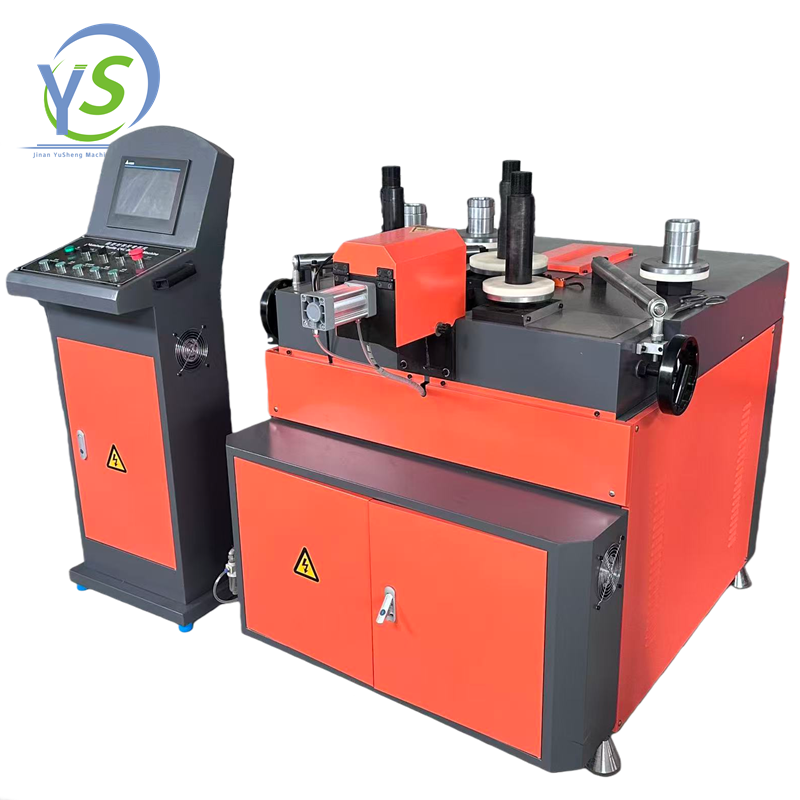
What Is CNC Three-Axis Control for Aluminum Bending?
Before diving into accuracy improvements, let’s clarify the core concept.
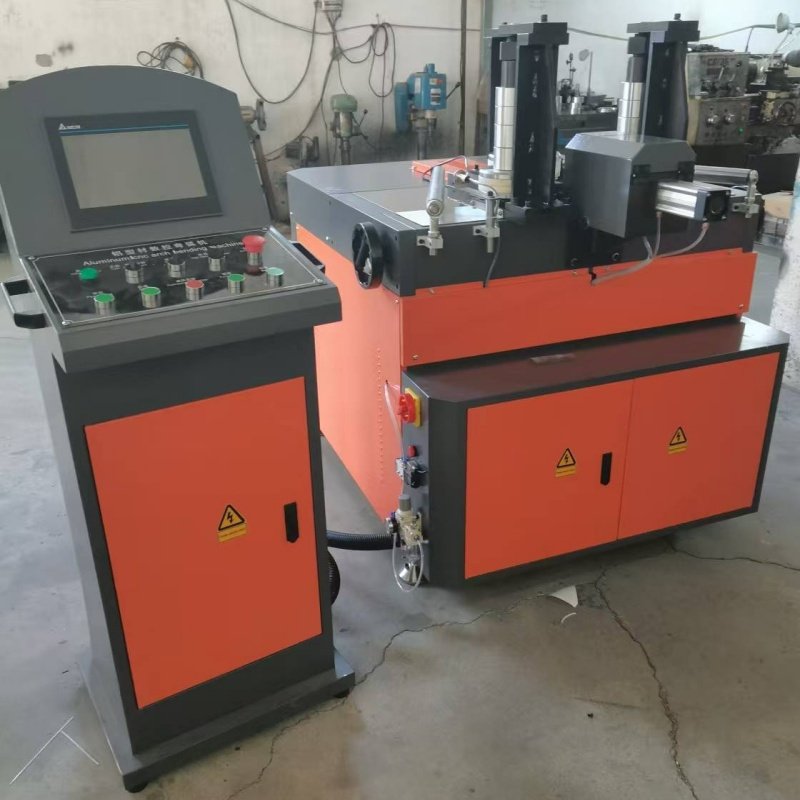
A CNC three-axis bending machine delivers synchronized motion across three independent programmable axes: feeding, clamping and bending rotation. Every movement is digitally controlled via preset programs, rather than manual adjustment or basic hydraulic limit switches.
Unlike single-axis units that only regulate bending rotation, three-axis equipment coordinates profile advance, holding pressure and bending angle simultaneously. This synchronized motion is the foundation of consistent aluminum forming.
1. Precise Compensation for Aluminum Springback
Springback is the biggest headache in aluminum bending. After force removal, elastic aluminum material partially rebounds, resulting in smaller radii or incorrect angles.
Traditional machines require operators to estimate compensation values manually. Results rely heavily on worker experience, leading to inconsistent parts batch to batch.
With CNC three-axis technology:
- Operators input material parameters (aluminum alloy grade, wall thickness, profile width) into the control system
- The controller automatically calculates and applies dynamic springback compensation
- Axis movement adjusts in real time during bending The outcome: Far fewer trial runs and far less scrap aluminum caused by wrong bend radii.
2. Minimized Profile Twisting & Surface Scratches
Aluminum extruded profiles have asymmetric cross-sections. Uneven force distribution during bending easily causes torsion, distortion and surface abrasions.
Three-axis synchronized clamping maintains uniform holding force throughout the whole bending cycle. The feeding axis steadily pushes the profile without slippage, while the bending axis applies gradual, balanced forming force.
Compared to older equipment, properly calibrated three-axis CNC bending greatly reduces twisting defects—critical for visible architectural aluminum profiles and structural mechanical components.
3. Stable Dimensional Consistency for Mass Production
For batch orders, buyers demand identical arc lengths, bend positions and finished dimensions. Minor variations can make assembly impossible.
Manual setups and single-axis machines create deviation drift after dozens of cycles. Hydraulic pressure fluctuation, slight positioning errors accumulate quickly.
Once a bending program is locked in on a three-axis CNC system:
- Every piece follows identical motion paths
- Bend starting points, rotation speed and feed distance repeat reliably
- Tolerance levels stay stable across hundreds or thousands of aluminum workpieces
This consistency directly simplifies downstream welding, assembly and quality inspection.
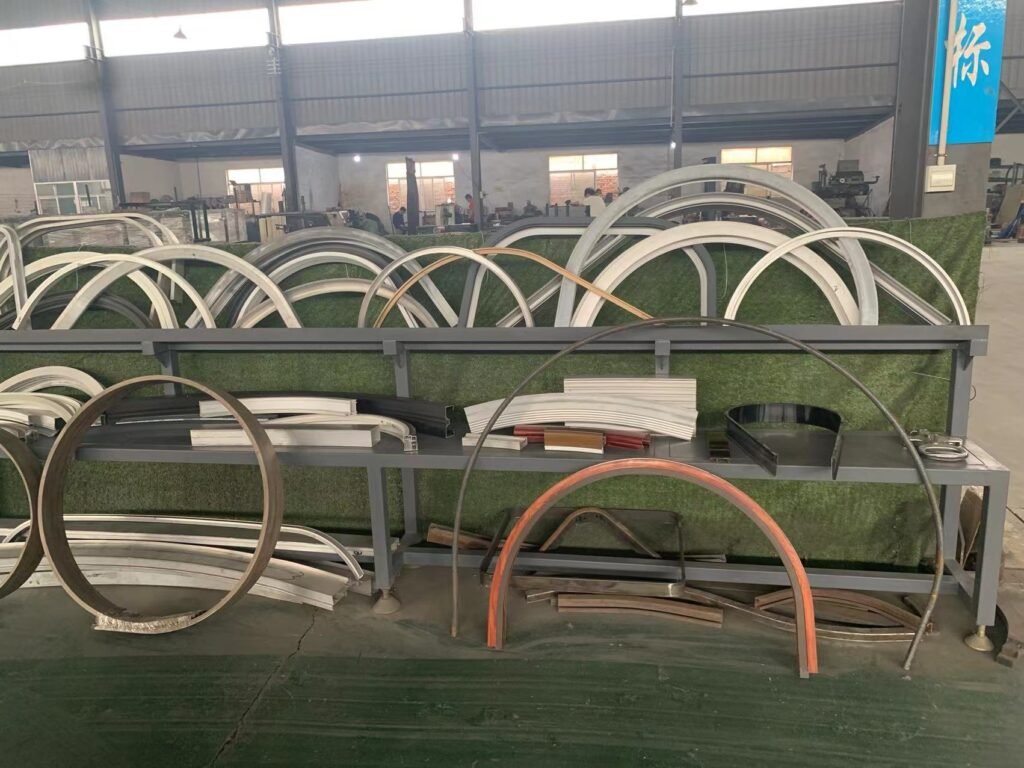
4. Higher Accuracy for Complex Multi-Radius Aluminum Curves
Modern projects increasingly require aluminum profiles with continuous variable radii or multiple segmented bends. It is extremely difficult to shape these components accurately on conventional bending machines.
CNC three-axis control supports segmented programming. You can set different bending speeds, rotation angles and feed lengths for each curve segment. The three axes coordinate seamlessly to produce smooth, continuous arcs without obvious transition marks.
This capability makes the technology ideal for curtain wall aluminum, transportation equipment frames and industrial aluminum structural parts.
5. Reduced Human Error & Lower Reliance on Senior Operators
Skilled aluminum bending operators are hard to recruit and retain. Manual trial-and-error training takes months.
Three-axis CNC bending shifts core process logic to digital programs. Once parameters are validated, less experienced staff can run production following saved programs.
Operators focus on loading, unloading and quality monitoring instead of constant manual fine-tuning. Human-induced inaccuracy drops significantly over long shifts.
Practical Tips to Maximize Three-Axis CNC Bending Accuracy
Technology alone cannot guarantee perfect results. Combine equipment advantages with these workshop practices:
- Input accurate aluminum alloy specifications; 6061, 6063 and 7075 aluminum show different springback behaviour
- Keep clamping dies clean and properly lubricated to avoid profile sliding
- Perform regular axis origin calibration to prevent gradual positioning drift
- Adjust bending speed according to wall thickness; thin aluminum requires slower forming movement
- Store proven bending programs for repeated customer orders
When Should Fabricators Upgrade to Three-Axis CNC Bending?
Consider investing in CNC three-axis bending technology if your workshop faces any of these pain points:
- High scrap rate during aluminum profile bending
- Frequent customer complaints about inconsistent bend dimensions
- Many orders with complex curved aluminum extrusions
- Heavy reliance on veteran bending technicians
- Tight tolerance requirements for finished aluminum components
Conclusion
Accuracy in aluminum bending is no longer limited by operator skill alone. CNC three-axis technology addresses the most persistent forming challenges: springback, torsion, dimensional drift and unstable batch quality.
Synchronized digital control across feeding, clamping and bending axes delivers repeatable precision, cuts material waste and expands production capacity for complex curved aluminum profiles.
For aluminum fabricators aiming to improve product quality and competitiveness, optimising bending processes with three-axis CNC systems represents a practical, high-return upgrade.

