
Aluminum mirror frames and photo frames remain high-demand products for interior decor, retail display, and custom furniture markets worldwide. As buyers push for tighter tolerances, consistent finishes, and faster lead times, many manufacturers are replacing traditional cutting and joining workflows with modern CNC aluminum bending solutions. Among these, the CNC one-way two-way aluminum profile bending machine stands out as a game-changer for mass production of mirror and picture frames.
Traditional frame fabrication often involves cutting aluminum extrusions into separate segments, then mitering, assembling, and welding corners. This multi-step process creates several common pain points. Weld seams require time-consuming grinding and polishing. Minor inconsistencies in cut length lead to uneven corners, rejected finished frames, and higher material waste. When scaling up orders, manual handling also slows throughput and increases labor costs.
The CNC one-way two-way aluminum profile bending machine solves these issues by bending a single continuous aluminum profile into complete frame shapes in one setup. It supports both one-way and two-way bending operations, giving fabricators flexibility to produce and custom curved frame profiles without splitting the extrusion into multiple pieces. Operators input frame dimensions via the CNC control system, and the machine executes precise bends automatically.
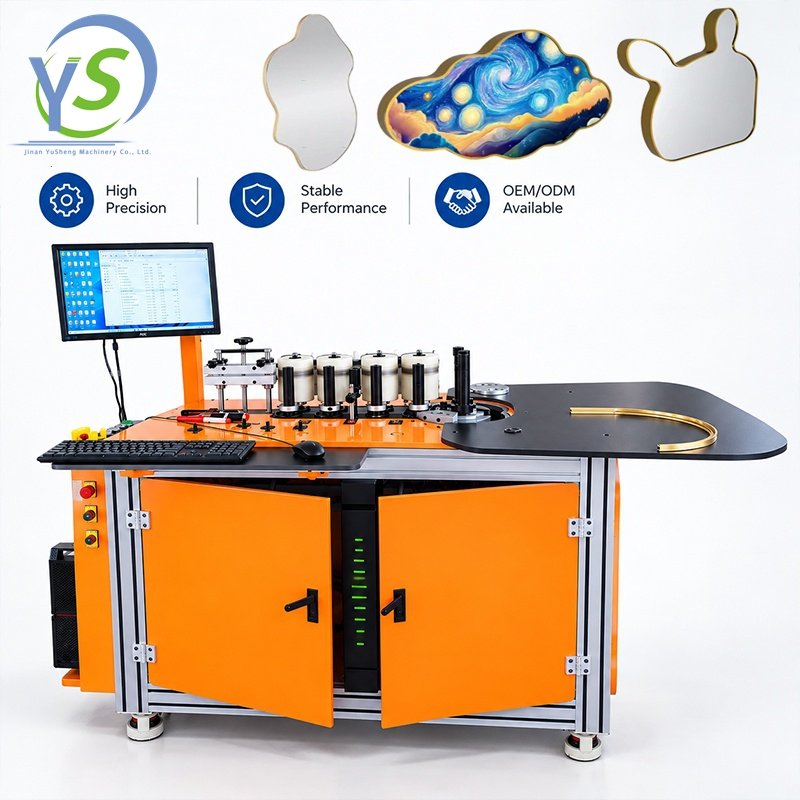
Key Advantages for Mirror & Photo Frame Mass Production
1. Eliminate Weld Seams for Superior Surface Quality
Continuous bent aluminum frames have no corner welds. The smooth, unbroken profile delivers a clean surface ideal for powder coating, anodizing, or brushed finishing. This finish is highly valued for premium mirror and photo frames, where visible weld marks are considered a critical defect. Fewer post-processing steps mean less polishing work and more consistent cosmetic results across large batches.
2. High Precision & Consistent Batch Quality
CNC control ensures bend angles and dimensions stay within tight tolerances across hundreds or thousands of frames. Unlike manual cutting and assembly, each finished frame matches the programmed specification. This consistency drastically reduces rejection rates. For exporters supplying retail chains and furniture brands, stable quality minimizes customer complaints and rework costs.
3. Boost Production Speed & Lower Labor Input
One-piece forming cuts down production steps. Instead of cutting four pieces, mitering, welding, grinding, and aligning corners, the machine forms a full frame in a single bending cycle. A single operator can manage multiple production runs, reducing reliance on skilled welders. For mass production orders, this directly shortens lead times and raises daily output capacity.
4. Reduce Material Waste
Conventional miter cutting generates scrap from each corner cut. Continuous bending removes most of this waste. Manufacturers save on raw aluminum extrusion costs, especially when running high-volume mirror and photo frame lines. Lower material loss improves overall profit margins for frame factories.
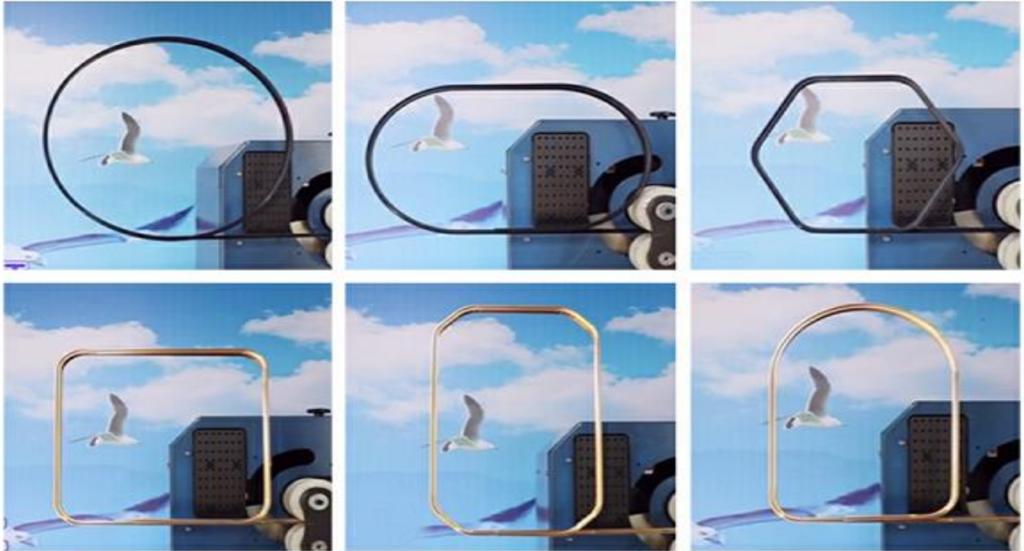
5. Flexible Bending Capacity for Diverse Frame Designs
The dual one-way and two-way bending function supports a wide range of aluminum profile types, including thin-wall decorative extrusions commonly used in frames. Factories can quickly switch between standard rectangular photo frames, large wall mirror frames, and special custom curved frame profiles. Fast program changes make the machine suitable both for bulk repeat orders and small custom batches.
6. Stronger Frame Structure
Bent one-piece aluminum frames maintain better structural integrity compared to welded assemblies. Welded corners are potential weak points prone to cracking under stress. Continuously bent profiles retain the original strength of the aluminum extrusion, producing frames that resist deformation during packaging, shipping and daily use.
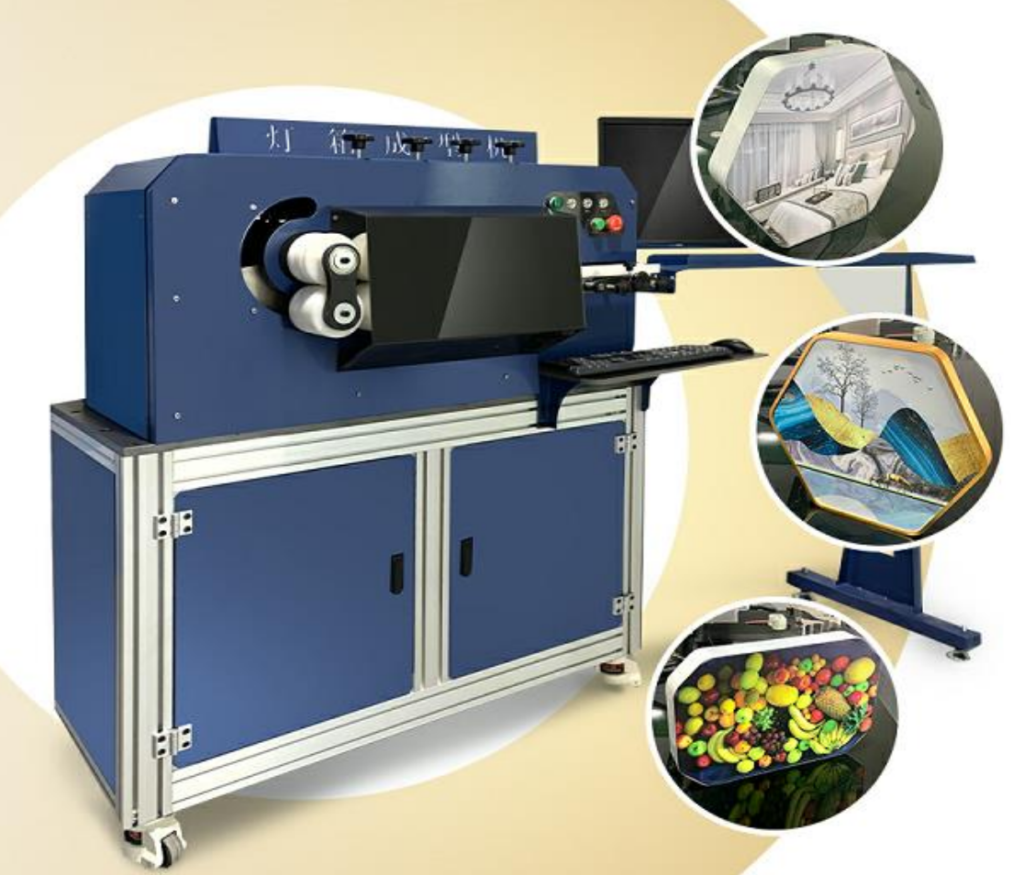
Practical Considerations for Frame Manufacturers
While this CNC bending machine brings clear benefits, successful operation depends on matching machine model to your aluminum profile thickness and section shape. Thin decorative frame extrusions require careful parameter tuning to avoid wrinkling or stretching during bending. It is also important to pair the bending unit with proper feeding and straightening equipment to keep profiles stable throughout the forming process.
For factories currently producing aluminum mirror and photo frames, upgrading to CNC one-way two-way bending equipment is not just about automation. It is a strategic upgrade to meet modern buyer requirements: flawless surfaces, reliable batch consistency, competitive pricing, and faster delivery.
Conclusion
As competition in the decorative aluminum frame industry intensifies, manufacturers need reliable technology to improve quality while controlling production costs. The CNC one-way two-way aluminum profile bending machine enables seamless one-piece forming for mirror and photo frames, removing weld seams, cutting waste, raising throughput and expanding design capability. For mass production operations targeting global decor and furniture markets, this bending solution delivers tangible operational and commercial advantages.
If you are looking to upgrade your aluminum frame production line and reduce post-weld processing, CNC one-way two-way aluminum profile bending equipment is worth evaluating for your workshop.

