
If you run a signage, light box or decorative mirror frame workshop, you know how critical consistent, precise aluminum bending is to your finished products. Uneven arcs, cracked aluminum profiles, mismatched frame corners and slow manual forming kill production efficiency and hurt your profit margins. That’s why single and double direction aluminum frame bending machines have become core workshop equipment for small sign shops and large mass-production factories alike. This article breaks down everything you need to know about these bending machines, their key advantages, core functions and how to pick the right model for your light box and mirror frame manufacturing lines.
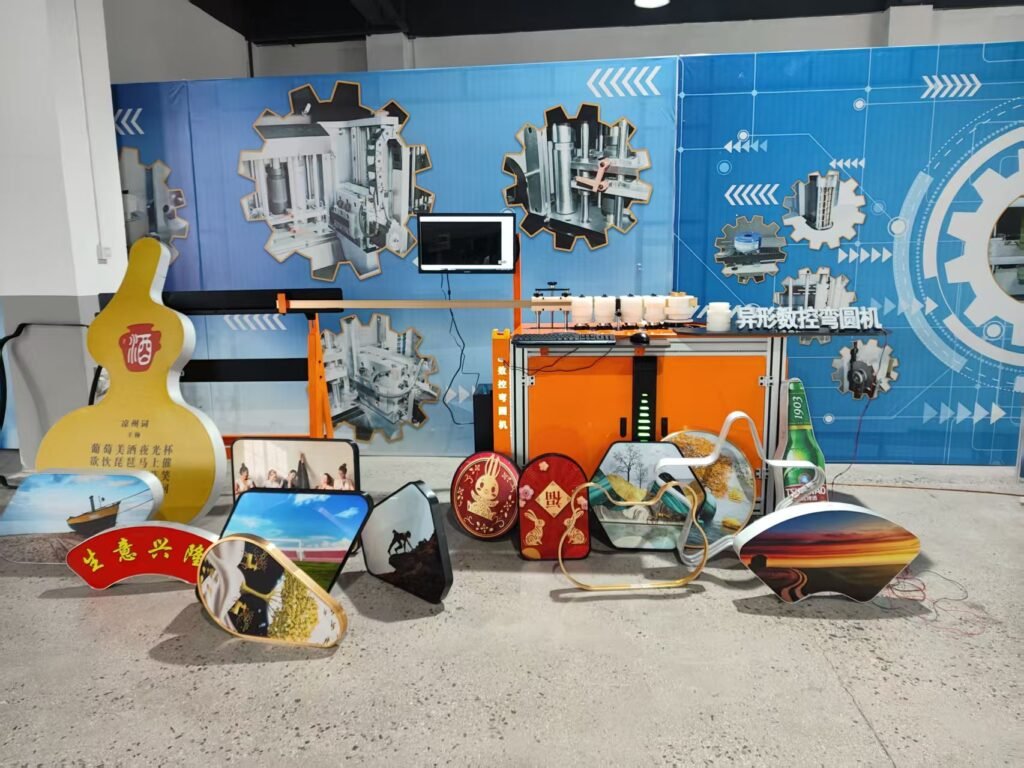
What Is an Aluminum Frame Bending Machine for Light Box & Mirror?
Aluminum frame bending machines are dedicated CNC forming equipment built exclusively for thin-wall aluminum profiles used in backlit light boxes, LED advertising signs, bathroom mirror frames, decorative wall mirrors and photo frame borders. Unlike universal metal benders designed for thick steel, these machines feature customized soft clamping fixtures, low-pressure hydraulic servo systems and precision arc control to avoid scratching, denting or splitting delicate thin aluminum alloy strips.
The market splits the equipment into two mainstream categories: single direction bending machines and double direction bending machines, each engineered to match different production volumes and frame design demands.
Single Direction Aluminum Frame Bending Machine
Single direction benders only form profiles along one bending axis. Operators feed the aluminum strip through the machine, program arc radii and corner angles on the touchscreen PLC control panel, and complete all bending processes forward in a single working stroke.
Best fit scenarios:
- Small-scale sign workshops with daily output under 50 light boxes
- Simple rectangular, square mirror frames with uniform 90° corners
- Beginners with limited budget and basic frame production requirements
- Low-variety orders with standard fixed-radius arcs
Key strengths: Compact footprint, easy operation, lower initial investment, minimal training time for new workers, low daily power consumption.
Double Direction Aluminum Frame Bending Machine
Double direction bending units support forward and reverse bi-directional bending without manually repositioning the aluminum profile. The dual servo motor drive enables complex multi-radius curves, irregular oval light box borders, rounded-corner mirror frames and custom asymmetrical advertising sign outlines in one continuous workflow.
Best fit scenarios:
- Medium to large signage factories with mass custom orders
- Production of curved, oval, irregular-shaped LED light boxes
- High-mix orders requiring frequent radius and angle adjustments
- Factories targeting high-end decorative mirror and boutique photo frame markets
Key strengths: 30–50% faster production speed than single-direction models, zero repeated clamping errors, capability for complex custom frame designs, consistent finished surface quality for high-end client orders.
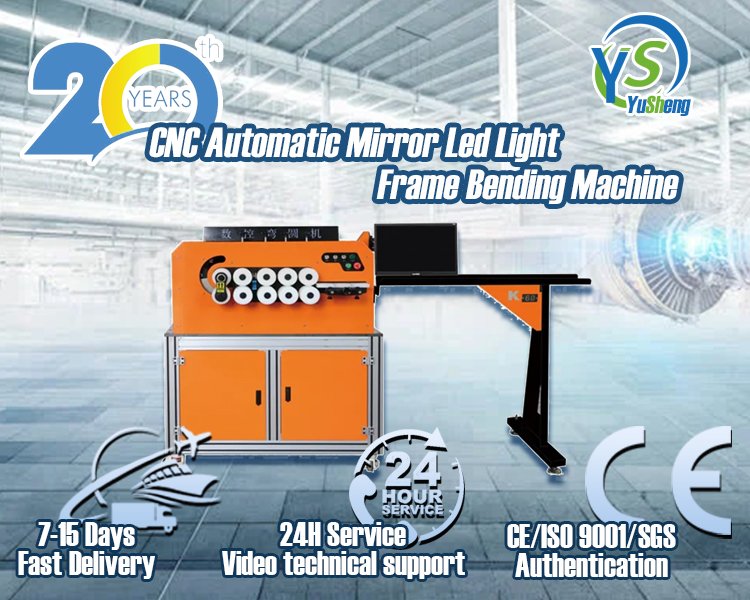
Core Benefits of Using Dedicated Aluminum Profile Bending Equipment
- Zero Surface Damage for Premium Finishes Light box and mirror aluminum frames often undergo anodizing, powder coating or brushed surface treatment. The machine’s silicone-coated clamping jaws eliminate scratches during bending, removing extra polishing rework and reducing material waste from scrapped flawed profiles.
- High Precision CNC Programmable Control Most modern single and double direction bending machines adopt industrial touchscreen PLC systems. Users save dozens of common frame parameters (rectangle, round corner, oval, special arc) as preset programs. Bending angle tolerance stays within ±0.1°, arc radius deviation under 0.2mm, ensuring every frame fits perfectly during assembly without gaps or loose joints.
- Wide Compatibility with Common Aluminum Profiles These benders support mainstream aluminum strip specifications widely used in the sign industry: thin-wall light box aluminum, mirror frame alloy strips, narrow border profiles for slim LED light boxes. Adjustable feeding width and bending pressure let operators switch between thin decorative frames and thicker outdoor advertising light box borders quickly.
- Significant Labor & Cost Savings Manual aluminum bending relies on skilled workers with hand tools, resulting in inconsistent frames, slow output and high labor costs. Automated bending machines cut manual labor requirements by half; one operator can run multiple units simultaneously, slashing per-unit production costs for light box and mirror products.
- Stable Long-Term Workshop Operation Hydraulic servo drive structures deliver smooth, vibration-free bending with low component wear. Compared with cheap manual bending jigs, CNC bending machines have a 8–10 year service life with only routine lubrication and mold maintenance required.
How to Choose Between Single & Double Direction Bending Machine
Your production order type and daily output volume determine the most cost-effective model for your workshop:
- Choose single direction bending machine if: You mostly produce standard square/rectangular mirror frames and simple straight-corner light boxes, have limited workshop space, and prioritize low upfront equipment cost.
- Choose double direction bending machine if: Your clients frequently request curved, oval, irregular custom light box frames, you handle high daily order volumes, or you plan to expand into high-end decorative mirror manufacturing with complex border designs.
Additional buying tips for sign makers:
- Confirm the machine’s maximum bending width and profile thickness match your regular aluminum raw materials
- Prioritize models with replaceable bending molds to adapt new frame styles without full machine replacement
- Select equipment with localized after-sales support and spare part availability to avoid long production downtime
- Test sample bending with your own aluminum profiles before bulk machine procurement to verify surface finish and precision
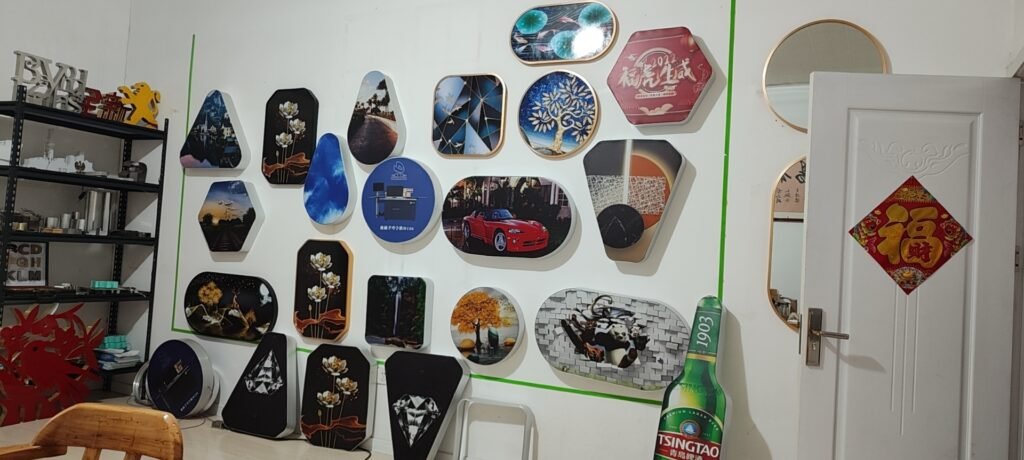
Common Applications in Sign & Decor Industry
This series of aluminum frame bending machines serves multiple vertical markets, covering core product lines for most sign manufacturers:
- Indoor & outdoor LED backlit light boxes: supermarket signage, storefront advertising frames, menu light boxes for restaurants
- Decorative mirror frames: bathroom vanity mirrors, wall decorative mirrors, luxury hotel mirror borders
- Photo & poster frames: slim aluminum display frames, exhibition gallery border strips
- Custom commercial signage: curved brand logos, oval promotional display frames
Final Takeaway
For light box and mirror frame manufacturers aiming to boost product quality, cut production lead times and expand custom order capacity, investing in a dedicated single or double direction aluminum frame bending machine delivers clear long-term ROI. Small entry-level workshops can start with affordable single-direction models for standard frame production, while scaling factories should upgrade to double direction bi-bending units to unlock complex custom design capabilities and handle higher daily output.
When sourcing bending machinery, always match machine functionality to your core product lines instead of overbuying unnecessary features. A properly sized CNC aluminum bending machine will become your most reliable asset for consistent, high-quality light box and mirror frame production year-round.

